


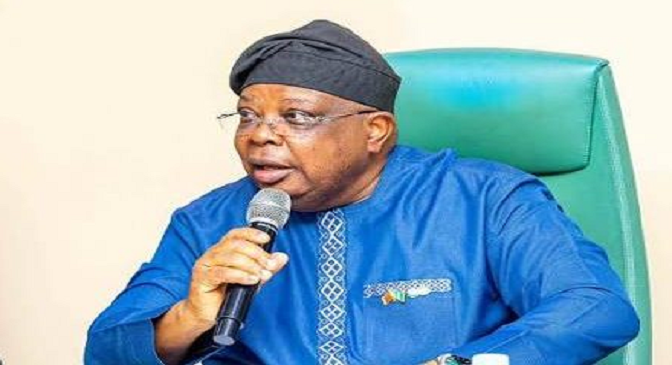
*Joseph Tegbe, Minister for Power, denies any plans in the Nigerian Government’s policy to raise electricity tariffs, or remove subsidies at present, insisting the administration’s immediate priority is to improve power supply, expand metering, strengthen the transmission network, and stabilise the national grid in the electricity ecosystem
Isola Moses | ConsumerConnect
Sequel to media reports on purported increments in power tariffs from 2027, the Federal Government Friday, July 31, 2026, denied any plans to end electricity subsidy or increase tariffs in the immediate term.
ConsumerConnect reports Mr. Joseph Tegbe, Honourable Minister for Power, who clarified the government position of the alleged planned tariff increases from next year, said the current administration rather intends to bring the power subsidy regime to an end by next year as part of efforts at addressing the rising liquidity crisis in the sector of the Nigerian economy.
NCC applauds Nigerians, industry stakeholders for successful ATU-CPL ’26
Tegbe stated this at a national media roundtable on “Resetting Nigeria’s Power Sector”, held in Lagos.
The Minister also affirmed that there is no government policy to raise electricity tariffs, or remove subsidies for now.
He rather insisted that the Nigerian Government’s immediate priority is to improve power supply, expand metering, strengthen the transmission network, and stabilise the national grid.
Tegbe stated: “Let me address two issues. The first is that, there’s no policy by this administration to increase electricity tariff beyond the current rate
“If anybody is giving you information or telling you we want to increase tariff, put everybody in Band A, please, in the immediate term, nothing like that. And tell Nigerians, nothing like that.
“I’m making a categorical statement. There’s no plan to do that.”
Measures to address issues in power sector
Speaking on tackling extant challenges in the power sector of the economy, Minister Tegbe said in resolving the industry liquidity problem, the Federal Government is advancing a Power Sector Bond initiative.
He disclosed the aim of the initiative is to settle legacy debts owed to electricity Generation Companies (GenCos) and gas suppliers.
According to him, the power sector currently bears about N3.3 trillion in debt.
The Minister asserted: “We have the mandate of Mr. President to clear the legacy debt and come up with sustainable structures to make sure this doesn’t pile up anymore.
“I promise you, next year, by God’s grace, we will put a stop to this so-called subsidy in the power sector.”
Still, many believe that Tegbe only backtracked shortly after making the initial announcement to end electricity subsidy, and jack up power tariffs from 2027.
He peradventure made a U-turn on the plans, realising the political implication of such a policy, ruling out any plan to increase electricity tariffs, or end subsidy in the immediate term, according to report.
Cost-reflective tariffs, macroeconomics and ‘resetting the sector’ initiative
The Nigerian Electricity Regulatory Commission (NERC) computes cost-reflective tariffs, based on prevailing macroeconomic variables in Nigeria.
Such factors include the Naira exchange rate, inflation, gas prices and generation costs.
The Minister, nonetheless, noted that the government policy has consistently prevented the sector from charging most consumers these full rates.
Besides ‘Band A’ electricity consumers whose tariff rose from around N68 per kilowatt-hour to approximately N225 per kilowatt-hour, the government still retains subsidy for customers in Bands B, C, D and E.
The Minister explained that the government currently has an estimated N200 billion monthly subsidy for non-Band A consumers.
While it has not been forthcoming on the actual amount it owes the operators, GenCos have said that the debt has now exceeded N7 trillion as of June this year, report noted.
Tegbe said President Bola Ahmed Tinubu’s administration was focused on making electricity “a catalyst for national productivity rather than a constraint to economic growth” through a new agenda tagged: “Resetting the Sector.”
He also told reporters Friday: “This conversation, therefore, marks the beginning of a new chapter of openness, accountability and collaboration.
“Above all, it marks the beginning of what we have appropriately termed ‘Resetting the Sector’.”
According to him, resetting the power sector does not discount past reforms.
The Minister explained it means building decisively upon the unprecedented reforms already initiated by the current administration whilst addressing long-standing structural deficiencies that have prevented the sector from reaching its full potential.
The objective, he stated, is to make electricity more available, the grid more reliable, the market financially sustainable, and restore investor confidence.
On Tinubu’s commitment to electricity sector reform
Tegbe as well credited President Tinubu with demonstrating the strongest political commitment to electricity sector reform since the liberalisation of the industry in Nigeria.
He cited the full implementation of the Electricity Act, which now allows states, including Lagos, and a few others to develop their own electricity markets.
Tegbe said: “Rather than viewing decentralisation as a threat, this administration has embraced it as an opportunity to unleash innovation, competition and investment across the Federation.”
Mechanisms to protect vulnerable electricity consumers
In regard to the need to protect power consumers, Tegbe said Federal Government would continue to examine mechanisms to shield vulnerable Nigerians while pursuing financial sustainability in the critical sector.
He averred: “There are Nigerians that can’t afford to adequately pay for power.
“These are the vulnerable groups. We want to protect them.”
On ‘Power Force’ programme for 5,000 Nigerian youths
Minister Tegbe announced a series of immediate interventions, including the inauguration of Power Force, a programme to engage 5,000 Nigerian youths for nationwide meter installation, progress on resolving meter procurement challenges, and the Presidential Metering Initiative aimed at ending estimated billing.
On generation, he noted that Nigeria has recorded improved output in recent weeks.
The Minister stated: “We are already witnessing encouraging improvements in electricity generation.
“Over the course of the last two weeks, we have consistently generated 5000MW.”
He further claimed that Nigerian electricity consumers are now enjoying about 16 hours of supply daily.
“Someday, in the next 2-3 years, we might have lights for 24 hours or 22 hours. God’s willing,” he said.
According to him, the Ministry of Power has also articulated a sector-wide transformation plan.
Key items include a technical audit of the national transmission network to identify ageing assets and bottlenecks, harmonisation of Federal and state electricity regulation, and a Grid Stabilisation Programme targeting three critical corridors: Lagos; Enugu–Port Harcourt; and Abuja–Kaduna–Kano.
Other initiatives are sector liquidity and loss reduction, strategic asset centralisation, and the Super Grid Programme to expand the transmission backbone.
Tegbe explained that asset centralisation will be done through two new vehicles: the Generating Asset Management Company (GAMCO), and the Renewable Assets Management Company (RAMCO).
He stated: “What we plan to do in that space, which is called GAMCo, is to put assets together… and using those assets to raise funds based on their balance sheet.
“And if we’re able to do that, we’re doing the same thing in RAMCo.”
He said the assets will be used to raise medium to long-term financing because those assets only produce stable, long-term cash flow.
Emphasising these plans are not mere rhetoric but designed for execution, Tegbe asserted: “Our mission is very clear. “Reliable electricity that powers our homes, competitive electricity that powers our industries, sustainable electricity that attracts investment and inclusive electricity that reaches every Nigerian.”
1.55m new prepayment meters for installation
The Minister also revealed that seven million metres will be rolled out in the next three years, starting with 1.55 million waiting the next six months.
According to him, there will be no more political installation of power equipment, particularly transformers in areas where they are not needed in the country’s power ecosystem.
He, therefore, assured Nigerians of improved electricity supply in the next six months.