


*The Global System for Mobile Communications Association launches its latest report on Mobile Internet Connectivity for the first time as a 6-part series, emphasising that connectivity gives consumers access to healthcare, education, e-commerce, and financial services, among others worldwide
Gbenga Kayode | ConsumerConnect
The Global System for Mobile Communications Association (GSMA) has described Mobile Internet as more than just a technology in the modern fast-paced, digitalised world.
ConsumerConnect reports the GSMA, in emphasising the strategic importance of Mobile for Development in economies around the world, said the technology is simply “a lifeline”.
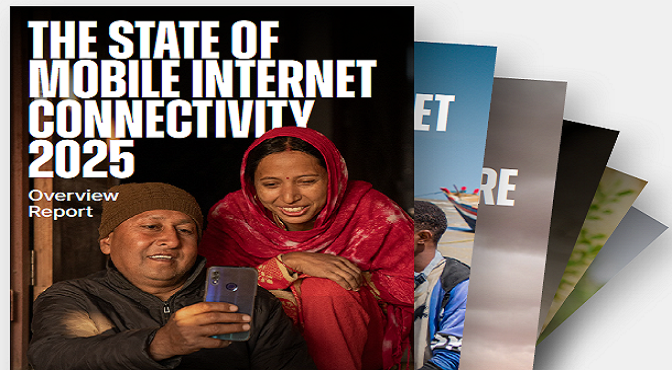
Unveiling its report on Mobile Internet Connectivity recently, the Association, for the first time, issued the publication as a 6-part series.
It further stated that connectivity gives digital consumers the world over access to healthcare, education, e-commerce, and financial services, among others.
The Association disclosed the current Mobile Internet Connectivity Report features the Overview Report; Trends in Mobile Internet Connectivity; Network coverage and infrastructure; Understanding mobile internet use in LMICs; Barriers to mobile internet adoption and use; and Affordability of internet-enabled handsets and data.
NAFDAC alerts consumers to 3 key categories of fake products across Nigerian markets
The GSMA, therefore, urged telecoms consumers to explore the trends, challenges and opportunities shaping connectivity in economies around the world.
Why mobile Internet connectivity matters
Experts have opined that mobile is connecting more people to the Internet than ever before, with 58 percent of the world’s population now accessing the internet through their own device.
Mobile remains the primary – in some cases, only – way most people access the internet in low- and middle-income countries (LMICs).
Mobile accounted for 84% of broadband connections in 2024.
After two years of relatively slow growth, 2024 saw an increase in the rate of mobile internet adoption globally.
However, significant digital divides persist. Those who are digitally excluded are more likely to be poorer, less educated, rural, persons with disabilities or women – groups that stand to gain the most from connectivity.
Addressing the digital divide provides significant socioeconomic benefits to individuals, societies and economies.
Mobile Internet enables access to essential services, such as healthcare, education, e-commerce and financial services, and provides income-generating opportunities.
It can help reduce poverty, and is associated with higher levels of wellbeing.
GSMA analysis has estimated that over the eight years from 2023 to 2030, closing the usage gap would provide $3.5 trillion in additional gross domestic product (GDP).
Closing the gender gap in mobile internet adoption in LMICs would provide $1.3 trillion
in additional GDP.
Of the global population, 38 percent live within mobile broadband coverage but do not use it, while 4 percent are still not covered by mobile broadband.
In an increasingly digital world, it is more urgent than ever to ensure everyone can access, use and realise the benefits of Internet connectivity.
Highlights of first ever GSMA report of 6 publications
For the first time, the GSMA is publishing “The State of Mobile Internet Connectivity” research as a series of six publications.
This is the first in the series and summarises the key findings from the other five publications.
Each of the remaining reports offers a more in-depth exploration of a specific topic, including regional, country
and demographic specific analysis.
The State of Mobile Internet Connectivity 2025 series draws on a range of data to analyse key trends since 2015.
It considers the importance of not just mobile Broadband coverage but ‘meaningful connectivity’ – users having a safe, satisfying, enriching and productive online experience that is affordable in their context.9
Achieving meaningful connectivity requires an understanding of both the barriers and enablers, including the fundamental enablers, affordability, knowledge and skills, safety and security, and relevant content
and services.
Of GSMA Consumer Survey, MCI and other reports
The findings of this report series are based on the GSMA Consumer Survey, the GSMA Mobile Connectivity Index10 (MCI) and a range of other industry reports.
The GSMA Consumer Survey is a face-to-face, nationally representative survey carried out each year since 2017 to understand access to – and use of – mobile and mobile internet in LMICs.
In 2024, it included more than 17,100 respondents from 15 LMICs.
The MCI measures the key enablers of mobile internet connectivity across 173 countries (representing 99% of the global population) against 32 indicators for 2014–2024.
The indicators are grouped into four overarching enablers: infrastructure, affordability, consumer readiness, and content and services.
Together, these data sources provide objective, quantitative metrics to track the key enablers of mobile internet adoption and usage, as well as insights into what consumers use mobile internet for or what prevents them from using it.
Achieving universal and meaningful digital connectivity: Setting a baseline and targets for 2030, United Nations Secretary-General’s Roadmap for Digital Cooperation and ITU, 2021
10 The web tool is available at www.mobileconnectivityindex.com11 Bangladesh, Egypt, Ethiopia, Guatemala, India, Indonesia, Kenya, Mexico, Nigeria, Pakistan, Philippines, Rwanda, Senegal, Tanzania and Uganda.
About GSMA
The GSMA is a global organisation unifying the mobile ecosystem to discover, develop and deliver innovation foundational to positive business environments and societal change.
The Association’s vision is to unlock the full power of connectivity so that people, industry, and society thrive.
Representing mobile operators and organisations across the mobile ecosystem and adjacent industries, the GSMA delivers for its members across three broad pillars: Connectivity for Good, Industry Services and Solutions, and Outreach.
This activity includes advancing policy, tackling today’s biggest societal challenges, underpinning the technology and interoperability that make mobile work, and providing the world’s largest platform to convene the mobile ecosystem at the MWC and M360 series of events.
“We invite you to find out more at gsma.com. The Connected Society programme works with the mobile industry, technology companies, the development community and governments to increase access to and adoption of mobile internet, focusing on
underserved population groups in developing markets,” it stated.
For more information, please visit www.gsma.com/connected-society
GSMA Intelligence is the definitive source of global mobile operator data, analysis and forecasts, and publisher of authoritative industry reports and research.
The Association also noted: “Our data covers every operator group, network and MVNO in every country worldwide – from Afghanistan to Zimbabwe.
“It is the most accurate and complete set of industry metrics available, comprising tens of millions of individual data points, updated daily.”
GSMA Intelligence is relied on by leading operators, vendors, regulators, financial institutions and third-party industry players, to support strategic decision making and long-term investment planning.
The data is used as an industry reference point and is frequently cited by the media and by the industry itself.
It added: “Our team of analysts and experts produce regular thought-leading research reports across a range of topics.”