



*The Federal Competition and Consumer Protection Commission reports some vegetable oil and salt samples collected from Nigerian markets in a recent survey were found to be inadequately fortified for consumers’ wellbeing, directing producers to ensure full essential vitamins and minerals in food products
Isola Moses | ConsumerConnect
The Federal Competition and Consumer Protection Commission (FCCPC) has said some vegetable oil and salt samples collected from Nigerian markets in a recent survey were found to be inadequately fortified for consumers’ wellbeing.
The Commission disclosed it conducted the study in partnership with the Global Alliance for Improved Nutrition (GAIN).
Nigeria’s commitment to improved telecoms infrastructure and zero-cost Right of Way policy
The FCCPC also said the survey was conducted in random markets and homes in the Northern and Southern parts of the country over a two-month period.
ConsumerConnect reports the market regulatory Commission said it applied the methodology, which included a Household Food Fortification Survey, complemented by the use of the Digital Fortification Quality Traceability Plus (DFQT+) platform to support the monitoring and traceability of fortified food products.
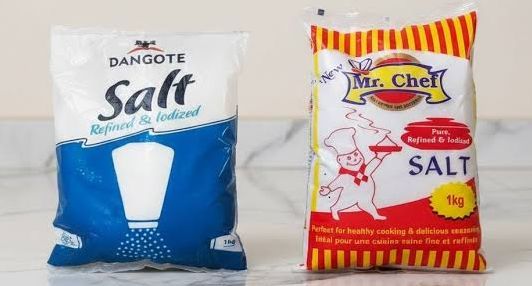
Some of the top salt brands in Nigeria are dominated by major local manufacturers and popular gourmet options widely available in supermarkets and open markets, according to report.
Essence of Large-Scale Food Fortification
The FCCPC describes the Large-Scale Food Fortification (LSFF) as the practice of deliberately adding essential vitamins and minerals, such as iron, folic acid, vitamin A, zinc and iodine to widely consumed staple foods and condiments during industrial processing.
The LSSF is intended to address micronutrient deficiencies and reduce the prevalence of hidden hunger.
The Commission further described the situation as a public health issue which affects consumers globally, including pre-school children and women of reproductive age.
The national food policy mandates manufacturers to fortify their products, FCCPC stated.
Results of analysis of 200 product samples
According to FCCPC, the results of the analysis of 200 samples (comprising 100 each of vegetable oil and salt) in the study conducted with GAIN showed that 12 percent of the oil and 2 percent of the salt were inadequately fortified at the household level.
Among the 100 vegetable oils sampled, 49 were unbranded while 51 were branded.
It also said the branded products included:
- Devon Kings – 19,
- Power Oil – 12,
- Activa – 4,
- Golden Penny – 3,
- Laziz Oil – 3,
- Mamador – 1,
- Lasor Oil – 1,
- Golden Terra – 1,
- Canola – 1,
- Primo Vegetable Oil -1,
- Zimzitana Oil – 1,
- Ayarah Oil – 1,
- Sim – 1,
- Tadenkey – 1, and
- Okli – 1.
Similarly, the Commission disclosed the salt samples included 19 unbranded, and 81 branded, including:
- Chef – 71 and
- Dangote -10.
Importance of DFQT+ in tracking of fortified foods
Highlighting further findings from the survey, the Commission noted that another key issue identified was the limited onboarding of manufacturers on the Digital Fortification Quality Traceability Plus (DFQT+) platform.
It said GAIN developed the platform to improve the tracking of fortified foods from production to the point of consumption.
The market regulator emphasised that better product traceability would benefit both consumers and businesses.
According to FCCPC, it makes it easier to identify quality concerns, improves transparency, and helps manufacturers and regulators to address problems across the supply chain.
The Commission revealed that only six vegetable oil producers had registered on the traceability platform.
Likewise, only eight results belonging to three of the six companies could be uploaded on the platform, among the 100 vegetable oil sample results analysed by the Commission.
Meanwhile, the Commission said it had issued a directive compelling the defaulting producers to comply.
The FCCPC also encourages manufacturers, particularly micro, small and medium-sized enterprises (MSMEs), in Nigeria, to embrace product registration and digital traceability, while promoting consumer awareness of the importance of fortified foods and proper product handling and storage.
Ondaje Ijagwu, Director of Corporate Affairs at FCCPC, in a statement Thursday, November 5, 2026, also noted Mr. Tunji Bello, Executive Vice-Chairman/Chief Executive Officer (EVC/CEO) of FCCPC, commented on the exercise and attendant findings.
Bello stressed that consumers should be able to trust the quality of the products they buy, and the benefits those products are expected to provide.
The EVC/CEO of the Commission stated that consumer protection is not limited to resolving complaints or addressing harmful business practices.
It also involves ensuring that consumers are not denied the value and benefits they are entitled to expect from products in the marketplace, said he.
Bello also declared that that businesses have a responsibility to maintain appropriate quality standards and ensure that their products meet applicable requirements.
Besides notifying the affected producers of the survey findings, the Commission also said it had escalated the development to the National Agency for Food and Drug Administration and Control (NAFDAC) for further action, in line with the Memorandum of Understanding (MoU) between the two government regulatory organisations.
Pingback:2027: Yilwatda seeks Ekiti voters’ support for Tinubu, APC candidates and Renewed Hope Agenda - Consumer Experience Is A Top Priority
Pingback:Oyo 2027: Alli cautions Adekanmbi against alleged ‘APM hoodlums’ attack on APC supporters in Ibadan - Consumer Experience Is A Top Priority
Pingback:Oyo APC urges ‘Boye Nation’ promoters to support all party candidates for 2027 Elections - Consumer Experience Is A Top Priority
Pingback:Digital Economy reforms drive skills development, innovation, digital infrastructure – NITDA - Consumer Experience Is A Top Priority
Pingback:Oyo Ahead: Senator Alli’s blueprint for state renewal - Consumer Experience Is A Top Priority
Pingback:2027: Aare Musulumi endorses APC’s Alli governorship ticket - Consumer Experience Is A Top Priority
Pingback:Nigeria’s commitment to improved telecoms infrastructure and zero-cost Right of Way policy - Consumer Experience Is A Top Priority
Pingback:Oyo: APC raises the alarm over Makinde’s alleged plan to sell Agodi Fish Farm - Consumer Experience Is A Top Priority