


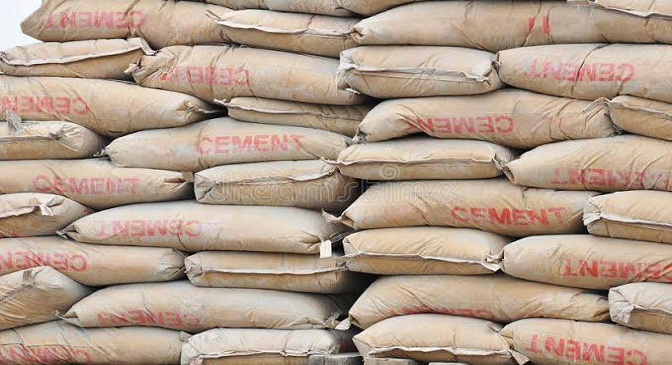
*The Federal Competition and Consumer Protection Commission, in recent findings, reports Nigeria’s cement prices are higher than those of Kenya, Tanzania, South Africa, Egypt, Morocco, Algeria and Togo despite abundant limestone deposits in the West African country
Isola Moses | ConsumerConnect
Despite its substantial production capacity and abundant limestone deposits, Nigeria’s Federal Competition and Consumer Protection Commission (FCCPC) has said the country’s cement prices are higher than some other economies on the African continent.
Hinting at a possible manipulation in the Nigerian system, the FCCPC finding followed a three-month investigation into the persistent rise in the cost of the key building material despite reported abundant mineral resources.

The market regulatory Commission said its preliminary findings suggested that prevailing cement prices could not be fully explained by prevailing market conditions, prompting it to deepen its investigation into possible anti-competitive practices in the industry.
ConsumerConnect reports the FCCPC’s findings emerged from a cross-border study by the FCCPC’s Anticompetitive Practices Department, launched in response to widespread complaints over the high cost of cement.
Mr. Ondaje Ijagwu, Director of Corporate Affairs of the Commission, Tuesday, August 18, 2026, stated the study compared Nigeria’s cement market with those of Kenya, Tanzania, South Africa, Egypt, Morocco, Algeria and Togo.
NELFUND highlights modalities for repayment of student loans after graduation
The Commission disclosed it assessed limestone availability, country’s population, production capacity, domestic consumption, and retail prices across the markets.
The statement also noted: “Findings from an industry-wide investigation conducted by the Federal Competition and Consumer Protection Commission suggest possible manipulation of prices of cement in the Nigerian market.”
The market regulatory Commission said Nigeria yet has installed cement production capacity estimated at between 60 million and 65 million metric tonnes (MT) annually, against domestic consumption of about 25 million to 30 million metric tonnes.
The FCCPC, however, found that despite the reported excess capacity and the country’s position as a net exporter of cement to neighbouring countries, domestic prices have continued to climb till this day.
The report further noted that a 50kg bag of cement that sold for between N9,300 and N9,700 in January had risen to between N10,500 and N13,000 by mid-year 2026.
According to FCCPC, by July, prices rose to between N13,000 and N15,000 in some parts of the country.
The Commission said its cross-border comparison also highlighted significant price differences between Nigeria and some other economies in Africa.
The Director of Corporate Affairs of FCCPC explained that in Kenya, where the population is about 58.6 million and domestic cement demand was estimated at 9.3 million metric tonnes in 2025, a 50kg bag sold for about $5.40, equivalent to N7,344.
Also, in Tanzania, with a population of about 66.3 million and similar cement demand, the product sold for approximately $4.80, or N6,528 per bag.
According to the Commission, even in Togo, which reportedly has no limestone deposits, a 50kg bag sold for about $6.75, equivalent to N9,180.
The statement indicated the price disparity has raised questions within the Commission over why Nigeria’s large production capacity and access to raw materials, including limestone deposits, have not translated into lower domestic prices for consumers.
While cement manufacturers have claimed high energy costs, Naira depreciation, the rising cost of imported machinery and spare parts, transportation and logistics expenses as major drivers of prices.
However, the FCCPC said it was testing those explanations against verified information on production costs, pricing, capacity utilisation and other market conditions.
It said: “Of particular concern to the Commission is that this level of production capacity has not resulted in the downward pressure on domestic prices that might ordinarily be expected in a competitive market with substantial excess capacity.”
Likely price fixing, anti-competitive distribution practices
Highlighting further details of the study, the Commission said its expanded investigation would determine whether current prices were being driven by legitimate costs or anti-competitive conduct by cement producers.
The FCCPC is examining possible coordinated conduct, abuse of market power, restrictions on domestic supply and anti-competitive distribution practices.
The Commission has consequently, issued Notices of Commencement of Investigation and Summons to Produce to key industry players, requiring them to submit records covering pricing methodologies, production, capacity utilisation, exports and commercial relationships.
Bello speaks on strategic importance of cement to economy
Speaking on the transnational comparative study, Mr. Tunji Bello, Executive Vice-Chairman and Chief Executive Officer (EVC/CEO) of FCCPC, said the investigation was necessary because of strategic importance of cement to the Nigerian economy.
Bello stated: “Cement occupies a strategic place in the Nigerian economy. Its price affects the cost of building a home, developing commercial property, delivering public infrastructure and, ultimately, the cost of doing business.”
Executive Vice-Chairman and CEO emphasised the investigation was not intended to dictate how companies operate or prevent legitimate profits.
He also stated: “Businesses are entitled to make legitimate commercial decisions and earn returns on their investments.
“Competition law does not prevent that. Its purpose is to protect the competitive process, so that prices, output and other market outcomes are determined by genuine competition rather than conduct that unlawfully restricts it.”
The FCCPC Executive Vice-Chairman noted the investigation came as Nigeria’s construction, and housing sectors grapple with rising input costs.
He said cement prices are fast becoming a major contributor to the cost of building homes, commercial properties and infrastructure in the country.
The outcome of the FCCPC probe could, therefore, have significant implications for cement manufacturers, distributors, construction companies and consumers.
This is particularly important, if the Commission establishes evidence of conduct that has artificially kept domestic cement prices above levels justified by underlying market costs in Nigeria.