


*Iranian Foreign Minister Abbas Araghchi discloses though discussions with Oman over transit and management of the critical Strait of Hormuz are ‘approaching the final stages’, reopening of Hormuz ‘is subject to other conditions and compensation for the violation’ of the June agreement with the United States
Isola Moses | ConsumerConnect
Amid the global energy crisis, the United States- Israel war against Iran, in the Middle-East is yet to abate.
ConsumerConnect gathered Iran Saturday, August 7, 2026, listed set the preconditions for a reopening of the critical Strait of Hormuz.
The conditions include getting a compensation for war damage, complicating a potential deal to open the waterway essential to the world economy.
Public Health: NDLEA alerts parents to illicit drug-infused cookies, gummies in Nigeria
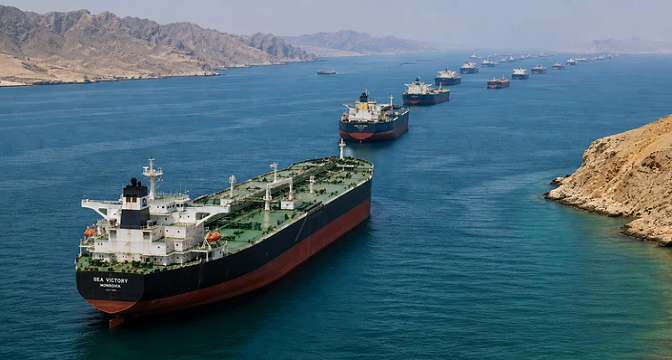
The Strait of Hormuz is regarded as a critical passage for oil-bearing vessels where 25 percent of total global energy products supply chain.
Tehran has imposed an effective blockade of the Strait since the US and Israel struck Iran February 28, 2026, and wants to charge tolls for passage, attacking ships it accuses of attempting to circumvent its preferred route, AFP report said.
Incidentally, continued attacks in the strait, which was free to transit before the war, led to the collapse of an April ceasefire, according to report.
Mediators have since urged both sides to return to the terms of a June memorandum.
Speaking on the development, Iranian Foreign Minister Abbas Araghchi said discussions with Oman over transit and management of the strait were “approaching the final stages.”
Araghchi, however, said the reopening of Hormuz “is subject to other conditions and compensation for the violation” of the June agreement.
Similarly, Security chief Mohammad Bagher Zolghadr Saturday laid out a list of demands for reopening the strait.
These, report noted, include an end to the “war and aggression against Iran and its allies in Lebanon, Palestine, Yemen, and Iraq.”
Zolghadr demanded the lifting of a parallel US naval blockade of Iran, the end of sanctions, the release of frozen assets, and compensation for wartime damage, according to Tasnim News Agency.
Meanwhile, Iran’s Revolutionary Guards has said Hormuz’s reopening has “nothing to do with the negotiations between Iran and Oman.”
That the “enemy is forced to accept Iran’s conditions for the opening of the strait.”
On repeated attacks against Iran
The official comments came as transit through Hormuz has dropped significantly, with Iran targeting ships it accuses of skirting its preferred route through Iranian waters.
The United Arab Emirates’ foreign ministry Saturday condemned what it called a “hostile Iranian attack that targeted a tanker belonging to ADNOC (Abu Dhabi National Oil Company) with a missile while it was transiting the Strait of Hormuz, without causing casualties,” agency report said.
The United Kingdom Maritime Trade Operations (UKMTO), later Saturday, said a ship was hit by a projectile off Oman in the Strait of Hormuz, causing a fire that was extinguished but no casualties.
It was unclear whether they were referring to the same ship.
On Friday, ADNOC had put out a statement saying that since the start of the war, 15 of its vessels had been attacked in Hormuz, “including three vessels this week alone”.
Oman’s foreign ministry Saturday condemned “repeated attacks on vessels transiting the Strait of Hormuz”, without naming Iran.
It also said that “ongoing negotiations regarding navigation arrangements in the Strait of Hormuz are proceeding in a positive and constructive atmosphere.”
The Ministry urged against any actions that might jeopardise the progress.
The previous US-Iran deal — meant to serve as a jumping-off point for negotiations on a permanent settlement — had said Iran and Oman would hash out future arrangements for the strait in discussion with other Gulf countries and “in line with the applicable international law”.
International law generally forbids tolling in such waterways, report stated.