


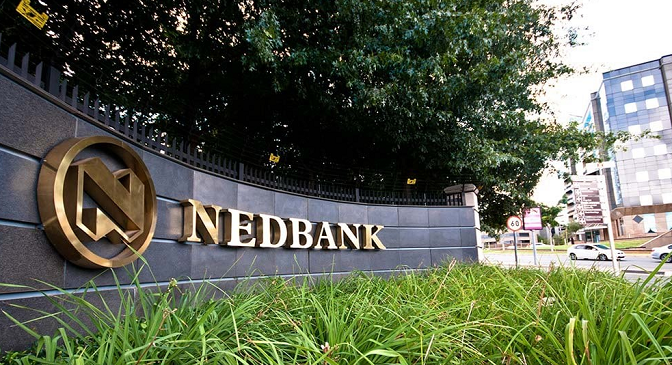
*Nedbank has reduced its ATM footprint by 345 devices over the past six years, and has continued to reduce the number of cash-accepting ATMs since 2024 due to the bank’s operating environment in the first half of 2026, mixed amid higher inflation in South Africa, driven by steep oil prices
Web Editor | ConsumerConnect
Nedbank has reduced its ATM footprint in South Africa by 345 devices over the past six years and has continued to reduce the number of cash-accepting ATMs since 2024.
The bank, headquartered in Sandton, has continued “rightsizing” its physical footprint after briefly adding new branches and ATMs in 2022.
Data Breach: Zenith Bank affirms unauthorised access to customers’ e-mails, phone numbers
According to Nedbank’s unaudited interim results for the 6 months ended 30 June 2026, the bank now has 539 branches in South Africa, down from 546 the year prior.
Alongside closing seven branches in 12 months, Nedbank has removed 112 ATMs since June 2025, including seven cash-accepting machines.
The primary driver has been a fundamental shift in how Nedbank customers bank, with a move toward digital platforms and solutions in pursuit of convenience.
“Digital volumes and values increased strongly as more clients across all our businesses embraced the benefits and convenience of digital channels,” said Nedbank CEO Jason Quinn.
The bank’s interim results showed that its customers are adopting digital payment solutions, an increase underpinned by 81% year-on-year growth in rapid interbank settlements through PayShap.
Nedbank’s recently acquired iKhokha platform was a key growth asset in the period, which it said expanded digital payment acceptance among SME customers.
Digitally active personal and private banking clients at Nedbank in South Africa grew to 3.5 million, up from 3.2 million the year prior.
The number of Money app clients also increased to 3.18 million.
This was up from 2.82 million the year prior.
Meanwhile, the number of teller transactions performed over the counter at branches declined to 1.95 million in June 2026.
These transactions have decreased year-over-year from 2.3 million in July 2025 as Nedbank shifted its strategy to digital systems, which it said was to match customer behaviour.
Volumes of withdrawals from ATMs in South Africa reached 72.6 million in June 2026, compared with 73.8 million over the prior 12 months.
Year Branches ATMs Cash-Accepting ATMs
2021 538 4,261 1,278
2022 545 4,334 1,328
2023 547 4,199 1,350
2024 543 4,105 1,324
2025 541 4,014 1,308
2026 H1 539 3,916 1,303
Six-year change +1 -345 +25
Nedbank reported flat performance
According to Quinn, the bank’s operating environment in South Africa in the first half of 2026 was mixed amid higher inflation driven by steep oil prices.
“The US-Iran war and the closure of the Strait of Hormuz weighed on the global economy in the second quarter of 2026,” he said.
“Higher energy prices pushed global inflation higher, prompting a more hawkish monetary policy stance in some markets.”
However, Quinn said that South Africa’s economic outlook continued to show encouraging signs of improvement thanks to a more credible economic plan, financial reforms and credit rating upgrades.
“Many of the country’s positive prospects as an attractive investment destination remain intact despite global uncertainties and the conflict in the Middle East,” he said.
For Nedbank, the economic outlook meant a stagnant financial performance. Headline earnings for the six months to 30 June 2026 were flat, said Quinn, at R8.4 billion.
Headline earnings per share were 1,841 cents in June 2026, seeing marginal growth since the same time last year, when it was 1,800 cents per share.
Nedbank recorded profit of R9.08 billion for the period, compared to R8.13 billion last year. Quinn said that the bank expected its underlying growth momentum to continue across all of its businesses.
“SA GDP growth is expected to improve modestly to around 1.3% in 2026 and 1.4% in 2027, supported by resilient consumer spending but constrained by weak business confidence.
“Banking conditions should improve gradually, with credit growth projected to remain positive and end the year at around 7%, although risks remain tilted to the downside,” he said. (Piece extracted from Mybroadband)