


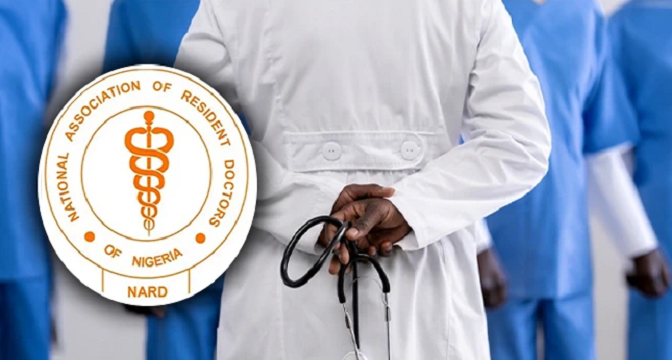
*The Nigerian Association of Resident Doctors issues the Federal Government August 10, 2026 ultimatum to implement the terms of a previously signed Memorandum of Understanding, or face a total, comprehensive, and indefinite strike across public health facilities, lamenting ‘the worsening state of Nigeria’s healthcare system’
Isola Moses | ConsumerConnect
The Nigerian Association of Resident Doctors (NARD) has given the Federal Government till 8:00 a.m. Monday, August 10, 2026, to implement the terms of a previously signed Memorandum of Understanding with the medical body, or face a total, comprehensive, and indefinite strike across public health facilities across the country.
NARD issued the fresh ultimatum to the government in a communiqué, signed by NARD President, Mohammad Suleiman; Secretary-General, Shuaibu Ibrahim, and Publicity Secretary, Abdulmajid Yahya.
NITDA rallies stakeholders to explore emerging techs for inclusive growth in Nigeria
ConsumerConnect reports the Association said it took the decision at the conclusion of its week-long National Executive Council (NEC) meeting held July 26-31, in Gombe State, Northern Nigeria.
Hosted by the Association of Resident Doctors in Gombe, the Resident Doctors held a press conference that attracted medical delegates to deliberate on pressing challenges within the health sector of the Nigerian economy.
The delegates at the media briefing expressed grave concern over what they described as the worsening state of Nigeria’s healthcare system.
Some Resident Doctors’ grievances
The Resident Doctors, in the communiqué, listed among other grievances, the alleged persistent cases of assault, harassment, and violent attacks on their members while discharging their duties.
NARD also noted poor remuneration, non-payment of outstanding salary and promotion arrears, deteriorating working conditions, and the purported intimidation and poor treatment of Resident Doctors at the Lagos University Teaching Hospital (LUTH), Idi-Araba, in Lagos State.
Besides, the medical association painted a grim picture of Nigeria’s declining medical workforce, and deteriorating infrastructure.
Comparative medical stats in Nigeria
According to NARD, while Nigeria had about 25,000 resident doctors 11 years ago, only a little over 12,000 remain in service to care for a population of estimated 250 million people.
The Doctors said of that remaining total, approximately 10,000 are employed by Federal health institutions, while only about 2,000 are spread across state-owned and private health facilities across the country.
Highlights of key demands, by NARD
In its latest communiqué, NARD outlined a 13-point demand for the government, warning that failure to substantially address these issues before the August 10 deadline would trigger a full-scale industrial action.
Some of the key demands include: Developing a National Healthcare Workers Assault Prevention and Response Protocol and enacting legislation to criminalise assaults on health personnel.
However, in resolving the crisis at LUTH, the Resident Doctors called Prof. Wasiu Lanre Adeyemo, Chief Medical Director (CMD), to order over the reported persistent intimidation of doctors, and restoring call-duty meals.
Another major demand is the immediate payment of outstanding 25/35 percent CONMESS upward review arrears and 19 months of Professional Allowance arrears.
Payment of omitted 2026 Medical Residency Training Fund (MRTF) allowances, as well as outstanding salary and promotion arrears across various federal health institutions.
Addressing severe workload pressures, excessive call duty hours, casualisation of doctors, and welfare challenges affecting House Officers.
Urgent rehabilitation, upgrading, and equitable distribution of healthcare infrastructure and modern medical equipment nationwide.
Aside from these, the Association noted that as it has repeatedly extended previous ultimatums in good faith, it would not tolerate delays in addressing the welfare and safety of its members any longer.
NARD, therefore, urged the Federal Government to resolve these concerns expeditiously in order to maintain industrial harmony, and ensure the survival of the all-important healthcare delivery system in Nigeria.