


*Khalil Suleiman Halilu, Executive Vice-Chairman and CEO of National Agency for Science and Engineering Infrastructure, expresses concern about Nigeria’s growing dependence on imported renewable energy technologies, proffering measures to industrialise
Isola Moses | ConsumerConnect
The National Agency for Science and Engineering Infrastructure (NASENI) has advocated a fundamental shift in Nigeria’s clean energy strategy.
Mr. Khalil Suleiman Halilu, Executive Vice-Chairman and Chief Executive Officer (EVC/CEO) of NASENI, who stated this, urged Nigeria and Nigerians to move beyond deploying renewable energy technologies to manufacturing them locally.
NITDA releases PKI framework to NIMC for secure digital identity ecosystem in Nigeria
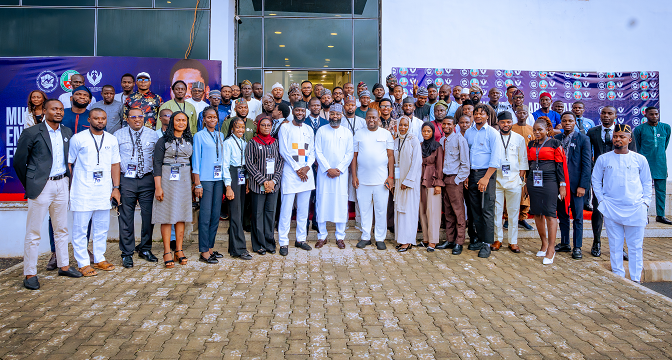
Speaking at the recent Mustapha Abdullahi Energy Leadership Fellowship in Abuja on the theme “Energy Infrastructure, Systems & Integration,” Mr. Chima Akwaja, Deputy Director Information at NASENI, in a statement noted Mr. Halilu said Nigeria’s energy future depends on building an integrated ecosystem that combines innovation, manufacturing, research, policy, financing and human capital.
He also commended the organisers, Dr. Mustapha Abdullahi, the Director-General of the Energy Commission of Nigeria, and the APC National Youth Leader, Hon. Dayo Israel, for investing in the next generation of energy leaders.
The NASENI EVC/CEO further described visionary leadership as the foundation for building lasting national infrastructure.
Halilu as well highlighted the scale of Africa’s energy challenge, Halilu noted that over 600 million people in Sub-Saharan Africa still lack access to clean energy, while the continent requires an estimated $15 billion annually to close the energy access gap by 2035.
Although Africa now has over 20 gigawatts of installed solar capacity, with solar photovoltaic projects accounting for 62 percent of renewable energy investments in 2024, the pace of implementation must accelerate, said he.
Turning to Nigeria, Halilu expressed concern over the country’s growing dependence on imported renewable energy technologies.
The statement noted the Executive Vice-Chairman of NASENI said: “In 2025 alone, Nigeria spent over ₦400 billion importing solar technologies.
In just the first half of 2026, that figure had already exceeded ₦200 billion.
“These are not just import statistics; they represent factories that were never built, jobs that were never created, and opportunities that left our economy.”
Halilu emphasised that energy infrastructure alone cannot industrialise a nation, explaining that sustainable development requires an integrated system where technology creation, manufacturing, innovation, policy, financing and skilled manpower work together.
According to him, this philosophy underpins NASENI’s transformation agenda, anchored on the Agency’s 3Cs Strategy—Creation, Collaboration and Commercialisation.
NASENI is creating technologies that solve local problems, collaborating with both local and international partners to accelerate technology transfer and capacity building, and commercialising innovation to ensure research translates into products that improve lives, said the EVC/CEO of the agency.
He further highlighted several flagship initiatives driving Nigeria’s clean energy ecosystem, including the 40-hectare Solar Industrial Park in Gora, Nasarawa State, which is positioning Nigeria to localise the production of solar panels, batteries and other renewable energy components.
Halilu as well cited NASENI’s partnership with the Rural Electrification Agency (REA) under the Nigeria First Policy, which promotes the deployment of locally manufactured renewable energy technologies in electrification projects nationwide.
Other initiatives, he said, include solar-powered irrigation systems that boost agricultural productivity, clean cookstoves that reduce dependence on firewood, and decentralised renewable energy solutions for communities, schools and healthcare facilities.
The Chief Executive of NASENI described these interventions as interconnected rather than isolated projects.
Halilu said they were designed to strengthen local manufacturing, create jobs, develop technical capacity and expand access to clean energy across Nigeria.
Addressing participants at the fellowship, he challenged young Nigerians to become systems thinkers capable of connecting technology with policy, innovation with investment and ideas with execution.
The EVC/CEO of NASENI averred: “Nigeria has the resources, the talent and the market to become Africa’s clean energy manufacturing hub.
“What we need are leaders who are prepared to build institutions, strengthen value chains and embrace collaboration.”
In reaffirming NASENI’s commitment to Nigeria’s industrial transformation, Halilu said the Agency’s objective extends beyond increasing energy access to ensuring that the technologies powering Africa’s future are increasingly designed, manufactured and commercialised from Nigeria.
The Executive Vice-Chairman of the agency posed a challenge to the audience, absolutely said: “When Africa’s clean energy future is fully realised, will Nigeria simply be a consumer of those technologies, or will we be among those who build them?”
According to him, NASENI has already chosen its path.
“We are building the ecosystem that will make Nigeria a leader in clean energy manufacturing and innovation while unlocking Infinite Possibilities for generations to come,” he added.