


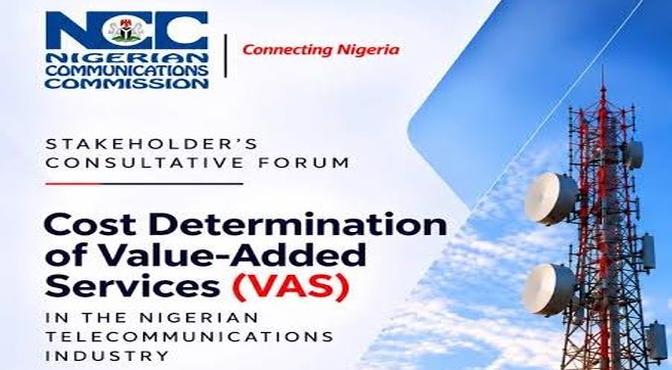
*The Nigerian Communications Commission discloses the proposed cost-based pricing regulatory benchmark for Value-Added Services seeks to establish a credible and transparent cost basis that supports fair competition, efficient cost recovery, continued investment, innovation and consumer welfare in the country’s telecoms ecosystem
Gbenga Kayode | ConsumerConnect
Sequel to recent concerns about pricing disparities, revenue-sharing arrangements and billing transparency in the telecoms value chain, the Nigerian Communications Commission (NCC) has begun moves to establish a cost-based pricing framework for Value-Added Services (VAS) in the country.
In addressing such concerns in the sub-sector, the NCC has commissioned a study to determine the actual cost of providing VAS, a market involving mobile network operators, aggregators, service providers, and content developers.
NAFDAC safeguards consumers’ health, destroys fake and banned drugs, other products worth N100bn
ConsumerConnect reports the Commission observed the market segment has operated without a common cost benchmark for pricing and revenue-sharing arrangements in the telecoms environment.
Highlighting the need for the proposed cost-based pricing regulatory benchmark for VAS, the telecoms sector regulator emphasised that the exercise could offer the regulatory basis for reviewing how revenues are distributed among players in the industry.
The stakeholders hinted that the proposed benchmark comes against the backdrop of a market where Mobile Network Operators (MNOs), aggregators and content developers negotiate commercial arrangements without a common reference for determining the costs and appropriate revenue shares associated with delivering services to telecoms consumers in Nigeria.
The NCC stressed the significance of the regulatory framework, particularly where differences in commercial agreements and operating costs influence the margins earned by participants.
Key objective of Stakeholders’ Consultative Forum on VAS value chain
Speaking at
Dr. Aminu Maida, Executive Vice-Chairman and Chief Executive Officer (EVC/CEO) of the Commission spoke on this Thursday, November 19, 2026, at the Stakeholders’ Consultative Forum on the Cost Determination of Value-Added Services in the Nigerian Telecommunications Industry, in Lagos.
Maida, represented at the forum by Mrs. Omotayo Mohammed, Head of Competition and Tariffs Unit of NCC, said the study would provide an evidence-based understanding of costs across the VAS value chain, and help identify inefficiencies and structural imbalances.
The Executive Vice-Chairman also stated: “Our objective is not to predetermine pricing outcomes, but to establish a credible and transparent cost basis that supports fair competition, efficient cost recovery, continued investment, innovation and consumer welfare.”
It is noted that study findings could shape the next phase of regulation in Nigeria’s VAS market, particularly as new digital services introduce more participants, complex delivery arrangements, and competing claims over the value generated across the telecoms environment.
Consultants on need for cost-based regulatory benchmark in VAS space
Speaking at the event also, Olusegun Ekundayo, Project Director at Skyquest Concept Projects Limited, the consultant handling the study, said Nigeria currently lacked a cost-based regulatory benchmark for VAS pricing and revenue-sharing arrangements.
Ekundayo affirmed that absence of a common cost reference has contributed to variations in prices, service quality, and margins across the value chain in the country.
It is equally noted that for content developers and smaller service providers, the absence of a transparent cost framework have raised questions about how much value they retain from services delivered through network operators and aggregators.
For operators and aggregators, it also creates differences in how commercial arrangements are structured and costs recovered.
It is equally noted that the Commission’s intervention is beyond establishing service prices.
The NCC’s regulatory move also could provide a common basis for assessing whether existing revenue-sharing arrangements adequately reflect the investments, infrastructure and services contributed by different participants.
NCC: No price unification in VAS industry
Underscoring the strategic importance of the Stakeholders’ Consultative Forum on the Cost Determination of VAS, the telecoms regulator however, said no decision to impose uniform prices or alter existing revenue-sharing agreements among players.
The Commission rather stressed that the findings would guide future regulatory decisions in the market.
Scope of VAS market study
The consultant with Skyquest Concept Projects Limited explained the study would examine the sector between 2017 and 2025, covering traditional services, such as Short Message Service (SMS), Unstructured Supplementary Service Data (USSD), Interactive Voice Response (IVR) and Web-based services.
In the study, the consultants also will assess emerging segments, including Artificial Intelligence, fifth generation (5G) networks, Internet of Things (IoT), Over-the-Top (OTT) services and technology providers offering cloud and application services.
It is noted that the expanded scope reflects the changing economics of Value-Added Services, which increasingly extend beyond conventional mobile subscriptions into digital content, financial applications, cloud-based solutions and connected devices.
Ekundayo as well cited a projected global VAS market value of $1.07 trillion in his presentation, highlighting the growing economic significance of the segment in the telecoms sector of the Nigerian economy.
Consumer protection in telecoms VAS segment
Restating the importance of safeguarding telecoms subscribers as its core mandate, the NCC said beyond commercial disputes in the VAS space, consumer protection yet remains another major concern driving the regulatory exercise.
The NCC equally identified billing transparency, consumer consent, unsolicited subscriptions, and unauthorised deductions as issues requiring attention in the all-important industry.
Reports further indicated that these concerns have persisted despite regulatory interventions intended to protect subscribers from being enrolled in services without their knowledge or charged for subscriptions they did not authorise.
Subsequently, the Commission introduced its VAS Aggregator Framework 2017 with an amendment 2018, to improve connections between content providers and network operators, address market-access concerns, as well as strengthen revenue-sharing arrangements.
Besides, the NCC introduced consumer safeguards, including the Do-Not-Disturb (DND) mechanism and short codes in a bid to improve control over unsolicited communications and subscriptions.
The latest study on the Cost Determination of VAS in the telecoms sector reportedly suggested that improving access and consumer safeguards alone might not address the underlying cost and commercial structures governing the market.
Put differently, a more transparent cost framework could help the telecoms sector regulator to distinguish between legitimate service-delivery costs, commercial margins, and pricing practices that may undermine competition or consumer welfare.
Maida seeks stakeholders’ cooperation to identified challenges
Reiterating the significance of the exercise, Dr. Maida urged industry stakeholders to cooperate with Skyquest Concept Projects by providing accurate and relevant information in the course of completing the study.
The EVC/CEO of NCC warned that delayed, incomplete or inconsistent submissions to the consultants could undermine the reliability of the findings in the end.
The Executive Vice-Chairman of the Commission, therefore, assured participants that commercially sensitive information submitted during the exercise would remain confidential, and that the consultants were contractually obligated to protect such data.
Justifying the need to gather needed information from industry players, the NCC cited Section 64 of the Nigerian Communications Act (NCA) 2003.
The NCA 2003 empowers the Commission to request relevant information and documents from licensed operators and other regulated entities in the country’s telecoms ecosystem.
In view of the importance of the study, and subsequent industry stakeholder engagement in Lagos, the Commission expects stakeholders to provide truthful, complete, and accurate responses within stipulated deadlines, appoint focal persons and notify it early of any challenges in submitting the requested information for success.