


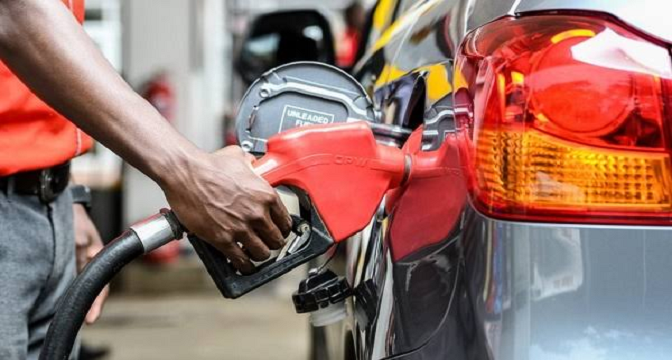
*Scores of motorists and commuters, especially in Nigeria’s Federal Capital Territory, urge fuel marketers to lower pump prices for energy consumers, following the Dangote Petroleum Refinery’s latest N35 per litre reduction in gantry price in regard to the continued impact of high fuel costs on household expenses and businesses across the country
Isola Moses | ConsumerConnect
Sequel to he recent N35 per litre reduction in Dangote Petroleum Refinery’s gantry price, several motorists, especially in Nigeria’s Federal Capital Territory (FCT), have expressed concern over fuel marketers’ failure to significantly reduce petrol pump prices.
Dangote Refinery, of recent, reduced its petrol gantry price from N1,250 to N1,215 per litre, indicating yet another downward adjustment in petrol pump prices.
Leo Stan Ekeh, at TIWLC Dubai, urges women leaders to choose ‘corporate suicide’ over safe path
However, the development has continued to generate concerns among motorists and commuters in the FCT, as they urged oil marketers to reflect the reduction in their retail prices.
Checks Sunday, November 8, 2026, in Abuja, FCT, showed that petrol prices at various filling stations still ranged between N1,385 and N1,420 per litre, agency report said.
Report also indicated that at the AY Shafa retail outlet, petrol was sold at N1,399 per litre; at the Mabso retail outlet, it was sold at N1,385 per litre; while at the Empire Energy retail outlet, fuel pump attendants sold the product at N1,420 per litre.
Besides, Total retail outlet sold at N1,410 per litre and Rainoil retail outlet sold at N1,410 per litre, report stated.
Motorists relate fuel market experience
Speaking on their fuel experience in the FCT, some motorists, who spoke to reporters said they hoped the latest reduction in Dangote Refinery’s gantry price would translate into lower pump prices for energy consumers.
Bala Usman, a motorist who resides at Mabuchi,in the FCT, said the reduction in Dangote Refinery’s gantry price should result in a significant decrease in petrol prices at filling stations as well.
Usman particularly, oil marketers to pass the price reduction on to energy consumers.
The motorist also expressed concern about the continued impact of high fuel costs on household expenses and businesses.
Adelaja Scott, a motorist and energy consumer, who resides at Durumi, asked fuel marketers to significantly reduce petrol prices.
Scott lamented the rising cost of transportation and other essential expenses in the capital city.
Ishiaku Baba, also a motorist, urged marketers to reflect the recent reduction in Dangote Refinery’s gantry price in their pump prices for consumers, too.
Baba noted that a reduction in petrol prices would offer relief to road user and other Nigerian consumers.
He also said lower petrol prices would also help reduce transportation costs, particularly for commercial operators who depended heavily on fuel.
Abubakar Waziri, a motorist, who resides at Lokogoma, as well urged marketers to ensure that reductions in their procurement for oil producers and operating costs were passed on to consumers.
Waziri also urged relevant stakeholders to ensure that consumers benefited from favourable market conditions.
IPMAN speaks on marketers’ adjustment to new pricing arrangements
Chinedu Ukadike, National Publicity Secretary of the Independent Petroleum Marketers Association of Nigeria (IPMAN), however, told reporters that marketers would need to review their pricing arrangements in the energy sector.
Ukadike said marketers would also review their remittances in line with the new supply costs.
The National Publicity Secretary of IPMAN noted that the expected reduction in petrol prices might take a few days to reflect at filling stations because marketers would need time to adjust to the new pricing structure.
According to him, the adjustment will depend on when marketers receive new supplies at the revised rates.
He further explained: “Some petroleum tankers carrying products purchased at previous prices are still in transit and must first arrive at their destinations and discharge their contents before marketers can begin adjusting pump prices.
“Refineries and marketers will need to review their pricing arrangements and remittances based on the new supply costs.”
The process can take a few days before the new prices are fully reflected at filling stations, Ukadike said.