


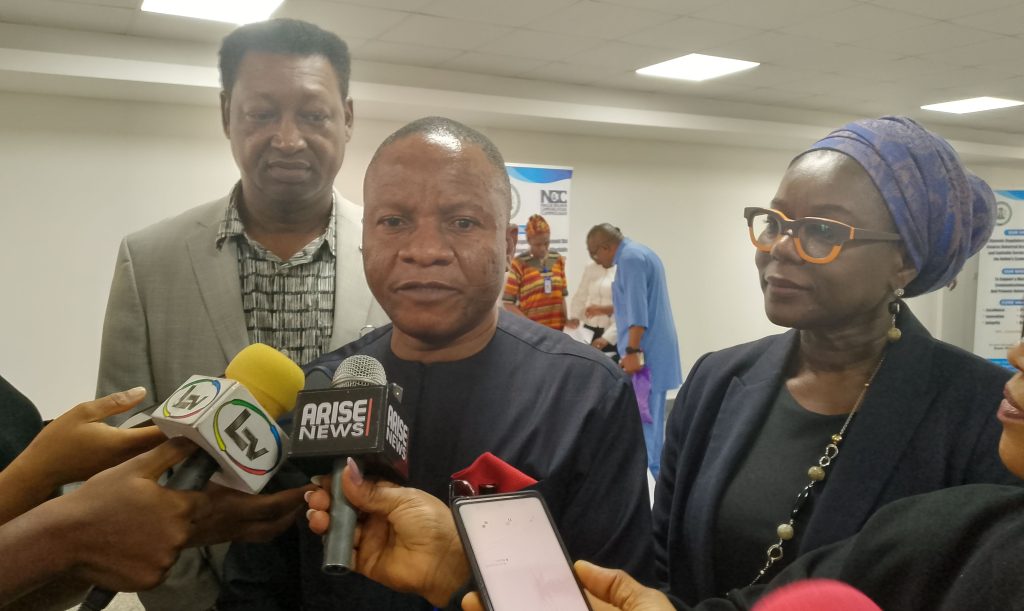
*The Nigerian Communications Commission highlights how its Device Checker platform supports the verification of the ‘Type Approval’ status of Subscriber Identity Module-enabled devices, and addresses the circulation, use of non-compliant, counterfeit, cloned, and unauthorised devices in the country’s telecoms ecosystem
Isola Moses | ConsumerConnect
As the country’s huge telecoms market continues to expand in leaps and bounds, the Nigerian Communications Commission (NCC) has highlighted the strategic importance of its recent introduction cum implementation of the Device Checker Platform to sanitise the ecosystem.
The NCC said the system was designed to support the verification of the “Type Approval” status of Subscriber Identity Module (SIM) enabled devices, and address the circulation and use of non-compliant, counterfeit, cloned, and unauthorised devices in the country’s telecoms environment.
ONSA, NCC, NITDA, others advocate collaboration, cyber resilience over AI-generated attacks
ConsumerConnect reports the telecoms sector regulatory Commission stated this in its update on the implementation of the Device Checker Platform presented at a media briefing Thursday, October 29, 2026, in Lagos.
The NCC said the initiative basically, was designed to “strengthen Type Approval compliance” in the telecoms market across the West African country.
Core objectives of NCC Device Checker system
Speaking at the briefing, Mr. Tunji Jimoh, Director and Zonal Controller, Lagos Zonal Office of NCC, in his address, emphasised that the deployment of the Device Checker platform is meant to protect telecoms consumers, and enhance the integrity of communications devices used on Nigerian networks.
Jimoh, representing the Executive Vice-Chairman and Chief Executive Officer (EVC/CEO) of the Commission, stated: “As Nigeria’s digital economy continues to expand, it is important that devices connected to our networks comply with established technical and regulatory standards.”
The Commission reiterated that the Device Checker Platform directly supports the verification of the Type Approval status of SIM-enabled devices while helping to address the circulation and use of non-compliant, counterfeit, cloned, and unauthorised devices in the Nigerian market.
Update on deployment of Device Checker platform in telecoms
Highlighting the level of deployment of the system thus far, the NCC disclosed the effort has recorded significant progress in implementing the initiative.
Jimoh also said the NCC recently, streamlined the licensing and regularisation process that enabled a significant number of device dealers in Kano State, Northern Nigeria, to get licensed.
Besides, he noted the Commission undertook stakeholder sensitisation engagements with importers, and other industry stakeholders in Lagos, the commercial hub of Nigeria, and other parts of the country, to deepen awareness of Type Approval requirements and Device Checker obligations.
The Zonal Controller, Lagos Zonal Office further explained: “Together, these initiatives have strengthened accountability across the device supply chain and improved compliance with regulatory requirements.
“To further simplify compliance processes, the Commission has developed a user-friendly Device Checker application that enables authorised stakeholders to quickly scan device IMEIs and upload information directly to the platform, improving efficiency and ease of compliance.”
Resources for telecoms consumers and industry stakeholders
The telecoms sector regulator said it had enhanced resources available on its corporate Web site for consumers and industry stakeholders.
It is equally noted that at https://imeiscanner.registermydevice.ng/ telecoms consumers can verify the status of a device before purchase through the “Check Your Device” portal at www.ncc.gov.ng/devicechecker by entering the device IMEI number.
The NCC as well urged industry stakeholders, including manufacturers, importers, distributors and dealers to access the Type Approval & Device Verification Guide at www.ncc.gov.ng/DeviceCheckerGuide, for guidance on their responsibilities under the Device Checker framework.
Similarly, organisations seeking to obtain Equipment Type Approval are encouraged to access application requirements and procedures through the Type Approval section of the Commission’s website at: www.ncc.gov.ng/industry/numbering-type-approval/type-approval.
The Commission said the itemised resources were provided to make compliance easier for industry participants while empowering consumers to make informed purchasing decisions in the telecoms market.
‘Device Checker Platform not a surveillance tool’
In regard to the core objective of the Device Checker system, Jimoh reiterated: “The Device Checker Platform is not a surveillance tool.
“It does not access personal data, messages, photographs, contacts, financial information, or any other private content stored on a device.”
He also averred that its purpose is “limited to device identification and regulatory compliance verification.”
The NCC said for further enquiries, complaints, or assistance, consumers might contact the telecoms regulator through the 315 Consumer Toll-Free Number, where guidance on device verification, and other consumer protection matters is readily available.
“We encourage consumers to verify device status before purchase, patronise reputable and licensed dealers, and utilise the Commission’s online resources and consumer support channels.
“We also urge manufacturers, importers, distributors and dealers to familiarise themselves with the Type Approval & Device Verification Guide and ensure full compliance with the Commission’s Type Approval requirements,” said the Director and Zonal Controller, Lagos Zonal Office of NCC.
He said the Commission appreciated the continued support of the media in helping to educate Nigerians and raise awareness of the important Device Checker initiative in the telecoms space.
Jimoh added: “The Nigerian Communications Commission remains committed to protecting consumers, promoting fair competition, strengthening network integrity, and fostering a trusted communications ecosystem for all Nigerians.”
Insight into Type Approval process
Earlier, in his technical presentation to the media, Engr. Kings Adeyemi, Assistant Director and Head of Wireless Network, Technical Standards and Network Integrity at NCC, had explained Type Approval concept involves both a brand and model of a SIM-enabled in telecommunications.
Engr. Adeyemi described it as a significant requirement before a product enters into the Nigerian telecoms market.
Referencing what obtains in other clones, the tip official of the Commission also countries worldwide critically examine samples of manufactured SIM-enabled devices, and if complaint with local regulations, subsequently, send “Certificates of Approval” to such product manufacturers before they commence mass production.
According to him, the NCC as a matter of regulation, takes inventory of SIM-enabled devices being imported into Nigeria, to conduct their performance evaluation, and assurance of genuineness of the devices in the market.
As regards the importance of the NCC Device Checker, which he affirmed is connected to the global central database, Adeyemi explained the NCC introduced the initiative as a “technical regulatory tool” for Type Approval in the telecoms sector of the economy.
He further said the tool is to ensure that SIM-based mobile devices, including phones, tablets, routers, Internet of Things (IoT) devices are Type Approval -compliant.
He noted since compliant mobile devices communicate with base stations, the NCC Device Checker checkmates the deployment of non-compliant, fake and counterfeit products from causing distortions in service quality on telecoms networks across the country.