


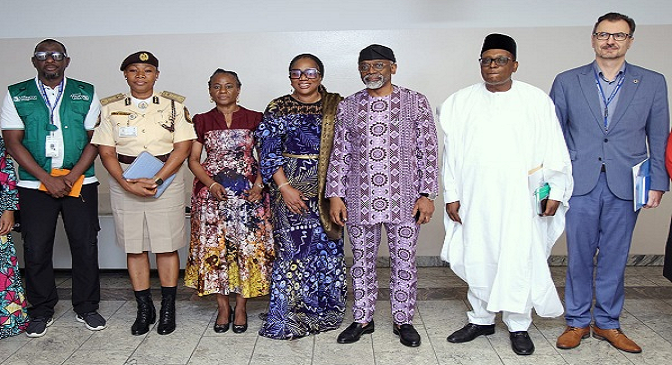
*The Federal Government assures Nigerians of containment capacity, technical expertise, surveillance infrastructure, and medical facilities needed to prevent the disease from spreading, urging calm as the World Health Organisation, Africa CDC join efforts at containing the disease
Isola Moses | ConsumerConnect
Following ongoing measures to prevent the spread of the index case discovered in Abuja, FCT, to other Nigerians, the Federal Government has intensified efforts at containing the Ebola virus.
ConsumerConnect reports the government said it had activated emergency response mechanisms by tracing individuals who had had contact with the infected foreigner, and placing identified contacts in isolation.
NITDA unveils National Digital Literacy Dashboard, trains 2.77m Nigerians in digital skills
It assured Nigerians that the West African country has the technical expertise, surveillance infrastructure, and medical facilities needed to prevent the disease from spreading to other states in the Federation.
The government also advised the citizenry to remain calm and comply with public health directives in respect of the virus.
Rt. Hon. Femi Gbajabiamila, Chief of Staff (CoS) to the President and Chairman of the Presidential Task Force on Ebola Virus Disease Preparedness and Emerging Public Health Threats gave the assurance Wednesday, October 21, 2026, after the task force met in an emergency session, in the State House, Abuja.
Gbajabiamila noted that the infected traveller, a woman who arrived in Abuja without symptoms, developed signs of the disease four days after her coming in.
The Chairman of the Task Force, however, said health officials identified her case through surveillance and screening protocols that the government had already established.
Government inaugurated Ebola task force since June: Official
Mr. Bayo Onanuga, Special Adviser to the President on Information and Strategy, Wednesday stated Gbajabiamila said the detection of the index case earlier Tuesday really demonstrated the effectiveness of preventive measures introduced, following the inauguration of the task force June this year.
The CoS to the President as well disclosed that approximately 44,000 flights had operated into and out of Nigeria since June, with relevant health and border control agencies maintaining surveillance to detect potential threats ever since then.
Membership of Presidential Task force on Ebola Virus
Key officials responsible for border security, aviation, healthcare delivery, and disease surveillance attended the emergency meeting.
Among them were the Comptroller-General of the Nigeria Immigration Service (NIS), Kemi Nandap; Managing Director of the Federal Airports Authority of Nigeria, Bunmi Kuku; WHO Representative, Pavel Ursu; and Special Regional Representative to the Director-General of Africa CDC, Dr. Aliko Ahmed.
Others included the Senior Special Assistant to the President on Administration and Operations and Secretary of the Task Force, Oyinade Nathan-Marsh; Public Health Executive, Niniola Williams; Mandate Secretary for Health and Environment in the Federal Capital Territory, Dr Dolapo Fasawe; and Chairman of the Medical Advisory Committee of the State House Medical Centre, Dr Victoria Ogala.
The Minister of Industry, Trade and Investment, Dr. Olajumoke Oduwole; Lagos State Commissioner for Health, Professor Akin Abayomi; and Director of Operations, Licensing and Training Standards at the Nigeria Civil Aviation Authority, Captain Donald Spiff, participated virtually.
Prof. Pate stated: “It’s very important to note this. Since the issue of Ebola came up in June, there have been about 44,000 flights in and out of Nigeria.
“So, it’s because of what the Ministry of Health, the task force, and all the agencies have been doing. All hands have been on deck.”
Chairman: How the index case was identified in Abuja
Explaining how the patient was identified, Gbajabiamila stated, “The passenger with the disease showed no symptoms, which came four days after the woman got into Abuja, and it was the identification process and the protocols that were put in place that enabled the quick identification.
“That also speaks to the country’s capacity and ability to deal with this disease as best as we can.”
Gbajabiamila said the Nigerian Government yet would review existing containment measures, strengthen areas requiring improvement, and ensure stricter enforcement of established health protocols across the country.
The response, he stated, required cooperation between government institutions and the public, warning that panic and non-compliance could undermine ongoing efforts.
NCDC, Task Force in action
Highlighting the government’s preparedness against the outbreak of Ebola virus in Nigeria, Gbajabiamila explained: “The Task Force is on top of it. NCDC is on top of it; everyone is on deck.
“We must build community trust and avoid panic, but it’s also important to state clearly that this is a collaborative effort between the government and the people.”
The Chairman of the
Gbajabiamila consequently appealed to Nigerians to cooperate with health authorities and comply with all directives issued to protect public health.
Authorities contact tracing, isolating individuals
Speaking on the development also, Prof. Muhammad Ali Pate, Coordinating Minister of Health and Social Welfare, confirmed that health authorities had begun contact tracing and isolating individuals who may have been exposed to the infected traveller.
Pate affirmed the Federal Government activated its incident management system, with technical support from the World Health Organisation (WHO), Africa Centres for Disease Control and Prevention (Africa CDC), and the Nigeria Centre for Disease Control and Prevention (NCDC).
The Minister, therefore, said the emergency response involved collaboration among Federal and state health institutions, private hospitals, immigration authorities, aviation agencies and other relevant organisations.
He stated: “We have been conducting contact tracing diligently and isolating those contacts of the index imported case in this country.
“We will continue to do that, and we want to reassure Nigerians that the federal government, alongside its technical partners, the World Health Organisation, the Africa Centre for Disease Control, and our own Nigeria Centre for Disease Control, have activated the incident management system across the various pillars.”
Besides, Pate said hospitals and other medical facilities had been placed on alert to ensure Nigeria could respond effectively to additional suspected cases.
He also noted: “They are working day and night diligently, and our hospital capabilities are also activated, such that we can aim to contain this case, as has been the case in other countries, but we will not relent.
“Our population should respect public health directives.”
According to him, the Federal Government is fast mobilising additional resources to strengthen preparedness and containment capabilities nationwide.
The Minister reassured Nigerians: “Most of our states have adequate response plans.
“We have the resources, and we’re mobilising those capabilities.
“And we’re also confident that if we continue on this path, we should be able to dent this outbreak.”
Warning against misinformation about Ebola virus
Prof. Pate has warned Nigerians against feeding on unverified information about the disease.
He also cautioned that rumours and false reports could generate unnecessary fear and complicate the government’s response against the virus in the country.
Nigeria is drawing on the experience of public health professionals, who successfully tackled the 2014 Ebola outbreak, and later helped other countries to manage similar emergencies at the time.
Pate daid: “The key also for the population is to avoid spreading misinformation or baseless rumours, which can cause unnecessary panic.
“The Task Force leadership has met. WHO and AfricaCDC are working closely with the team.”
He further expressed confidence that Nigeria’s previous experience, established public health infrastructure, and international technical cooperation would strengthen ongoing containment efforts.