


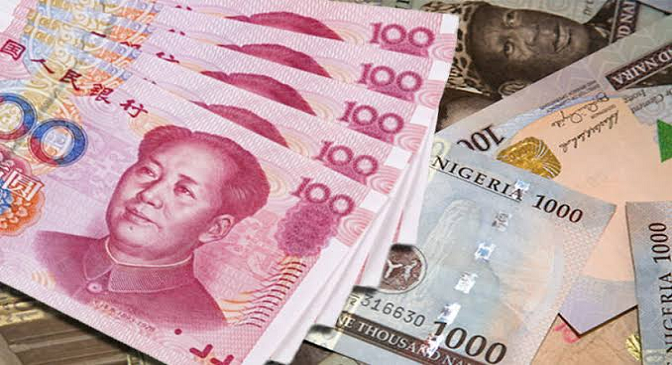
*Olayemi Cardoso, Governor of the Central Bank of Nigeria affirms his proposed visit to China focuses on furthering technical talks with the People’s Bank of China, and strengthening collaboration with other Chinese financial institutions, especially in payment systems, cross-border transactions, and knowledge-sharing
Gbenga Kayode | ConsumerConnect
As the Bank leadership intensifies efforts at ensuring exchange-rate stability boosts prospects for long-term Naira financing, Olayemi Cardoso, Governor of the Central Bank of Nigeria (CBN), has announced plans to visit Beijing, for further technical talks with the People’s Bank of China.
The CBN stated the move is aimed building much stronger cross-border payment systems and boost bilateral trade between the two economies.
Energy Blues: Oil vessel catches fire after hitting mine in Iran’s Strait of Hormuz
ConsumerConnect reports the banking sector regulator is seeking deeper financial cooperation with Chinese banks and institutions.
The CBN also affirmed that improving exchange-rate stability creates opportunities to attract more long-term investment into the Nigerian economy.
Olayemi Cardoso, Governor of CBN, who stated this at the weekend during the Nigerian delegation’s closing media briefing at the 2026 International Monetary Fund (IMF) and World Bank Group Annual Meetings, in Bangkok, Thailand, said the banking sector regulator was looking forward to strengthening collaboration with Chinese financial institutions, particularly in payment systems, cross-border transactions, and knowledge-sharing.
On expected engagements with Chinese financial institutions
Cardoso noted the Bank planned explore opportunities to attract greater investment from Asian markets into Nigerian financial instruments.
The CBN’s planned engagements in China would move beyond high-level discussions to identify practical areas of cooperation, stated he.
According to Cardoso, the proposed visit to China is sequel to his recent engagements in Singapore.
The CBN Chief affirmed the engagements formed part of Nigeria’s broader effort to deepen financial and economic ties with Asian markets, and reflects the CBN’s push to strengthen institutional cooperation, explore opportunities for cross-border financial collaboration, and attract more Asian investment into Nigerian markets.
He averred: “We are basically interested in seeing how we can deepen collaboration between institutions, Chinese banks, Nigeria Central Bank, and others, and the payment system in particular.”
The CBN as well noted that China’s payment infrastructure offers potential lessons for Nigeria.
Cardoso said the CBN was interested in peer reviews and exchanges between the two countries’ financial institutions.
The CBN Chief further said that the initial discussions had taken place at leadership level during the Annual meetings, with more detailed engagements expected during the planned visit to the Asian country.
He explained: “So the first engagement we had here was an engagement at the top.
“And then once we go to China, people will be rolling up their sleeves and coming down to brass tacks as to what makes sense and what doesn’t.”
Significance of Nigeria’s improved macroeconomic stability
The Governor of CBN highlighted the potential for Chinese and other Asian investors to increase their exposure to Nigerian financial instruments.
Itvis believed that his comments at the briefing came as the country seeks to convert recent reported improvements in macroeconomic indicators into stronger investment and economic growth for prosperity of Nigerians.
He emphasised that investment from the region has remained limited despite the substantial liquidity available in its markets.
Cardoso said Nigeria’s improved macroeconomic stability could help to change that pattern by reducing the currency risks that previously discouraged long-term investment.
He averred: “The chances of getting long-term Naira capital have increased astronomically as a result of the stability that we are finding in markets.”
The Governor of CBN as well cited the narrowing gap between Nigeria’s official and parallel Foreign Exchange (Forex) rates as evidence of the improvement.
The premium, which haf previously reached about 60 percent, has declined to around 3 to 4 percent, said he.
According to him, the reduction in exchange rate distortions has eased off a major obstacle to financial institutions seeking to develop long-term naira-denominated financing products.a
Update on Nigeria’s banking sector recapitalisation
Cardoso highlighted the ongoing banking sector’s recapitalisation exercise as part of the Federal Government’s efforts at shoring up Nigeria’s financial system while improving its capacity to support economic growth in an exercise which raised N4.65 trillion, with just over 70 percent of the funds coming from domestic investors.
Cardoso restated the CBN’s responsibility is to maintain monetary and price stability, while development finance institutions should channel capital into productive sectors of the economy.
Cardoso equally identified the Africa Finance Corporation (AFC), which he now chairs, the Bank of Industry (BoI) and the Development Bank of Nigeria (DBN) as institutions expected to play a greater role in mobilising financing as market conditions improve.
The CBN Governor emphasised the importance of policy consistency and transparency in sustaining investor confidence in the financial system.
International investors closely monitor economic developments and policymakers’ decisions in the Nigerian system, he noted.
The CBN Governor said consolidating the identified gains of macroeconomic indices would require sustained policy discipline, stronger institutions and closer cooperation with international partners.
Cardoso, therefore, expressed optimism that stronger financial ties with China and other Asian economies could open up new channels for investment, trade financing and payment-system cooperation in the financial ecosystem.
Pingback:NITDA, NACCIMA set to unlock private-sector investments, commercial offtake for startups, enterprises - Consumer Experience Is A Top Priority
Pingback:Energy Blues: Oil vessel catches fire after hitting mine in Iran’s Strait of Hormuz - Consumer Experience Is A Top Priority