


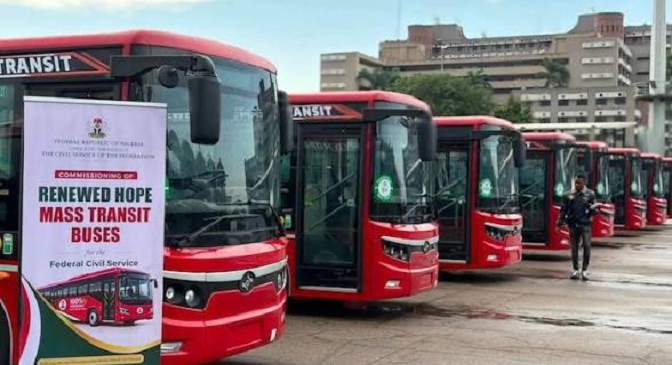
*President Bola Ahmed Tinubu emphasises that over the past three years, his administration has successfully built a growing CNG ecosystem with over 120,000 converted vehicles, 400 certified conversion centres, and more than 90 refuelling stations for alternative energy consumers nationwide
Isola Moses | ConsumerConnect
Following improved adoption of domestic alternative energy in the Nigerian economy, President Bola Ahmed Tinubu, GCFR, has directed all 36 State Governors to accelerate the implementation of the National Affordable Compressed Natural Gas (CNG) Transit Programme.
Tinubu said the move would ensure consumers begin to experience measurable reductions in transportation fares starting October 1 across the country.
NAFDAC: High methanol concentration cause of 182 alcohol cases with 42 deaths in Ondo
President Tinubu, in a statement at the weekend, referenced his August 27, 2026, meeting with the Nigeria Governors’ Forum (NGF), where a joint objective was set to slash transport costs across the West African country, using domestic alternative energy.
In order to ensure execution of the policy decision, the Presidency and the State Governors established an implementation committee.
ConsumerConnect reports Governor AbdulRahman AbdulRazaq of Kwara State and Chairman of the Nigeria Governors Forum chairs the implementation committee.
Disputing the recent calls for the return of petrol subsidy regime amid rising global energy disruptions, Tinubu emphasised that Nigeria could not control international crude prices but could insulate itself by tapping into domestic natural gas.
The Nigerian leader noted that over the past three years, his administration has successfully built a growing CNG ecosystem with over 120,000 converted vehicles, 400 certified conversion centres, and more than 90 refuelling stations for consumers nationwide.
The President also highlighted several active deployments where alternative energy transit services are already delivering significant cost savings to commuters:
Demonstrated fare reductions across states, FCT
| Location / State | Route / Service | Commercial Fare | CNG / Electric Fare | Savings |
| Borno State | Intra-state public transport | ₦300 – ₦600 | ₦50 – ₦100 | 80% – 83% reduction |
| Kaduna State | Major routes (100 CNG buses) | Commercial rate | FREE | 3.2m passengers served; ₦3.5bn saved |
| Oyo State | Lagos – Ibadan (Pacesetter) | ₦8,000 | ₦3,200 | 60% reduction |
| Adamawa State | Regional transit routes | ₦8,000 | ₦4,000 | 50% reduction |
| Enugu State | Enugu – Nsukka (100 CNG buses) | ₦2,500 | ₦1,500 | 40% reduction |
| Plateau State | State-supported bus system | >₦500 | ₦200 | 60% reduction |
| Abuja (NURTW) | Area 1 – Gwagwalada | ₦1,500 | ₦900 | 40% reduction |
| Abuja (NURTW) | Nyanya route | ₦700 | ₦420 | 40% reduction |
| Abuja (NURTW) | Wuse route | ₦400 | ₦240 | 40% reduction |
| Niger State | Suleja – Abuja express | ₦800 | ₦550 | ~31% reduction |
| Abia State | State electric buses (40 units) | Commercial rate | 50% Subsidized | 50% reduction |
While commending early adopters such as Edo (50 buses), Kano (over 1,000 converted commercial vehicles), Delta, Kwara, Lagos, and Akwa Ibom (50 CNG buses received), President Tinubu stressed that more must be done to meet the October 1 deadline.
Tinubu, therefore, urged governors to collaborate directly with transport unions, support vehicle conversion, expand refuelling infrastructure, and strictly monitor commercial operators to ensure that cheaper energy costs directly translate into lower daily fares for the Nigerian public.