


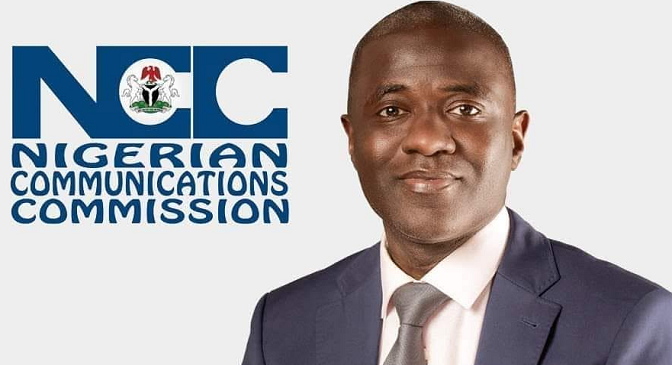
*Dr. Aminu Maida, Executive Vice-Chairman and CEO, Nigerian Communications Commission, opined as Artificial Intelligence is fast reshaping newsrooms by assisting media and communications professionals in news production and dissemination, they should guard against sophisticated AI-generated images, audio clips, and other digital content that could fuel misinformation increasingly in cyberspace
Gbenga Kayode | ConsumerConnect
Artificial Intelligence (AI) and other emerging technologies are rapidly transforming journalism, news production, and the way information is being disseminated to news consumers in modern times.
Dr. Aminu Maida, Executive Vice-Chairman and Chief Executive Officer (EVC/CEO) of the Nigerian Communications Commission (NCC), reechoed this sentiment while speaking at a recent media sensitisation workshop.
Nigeria harnesses $1bn public IT demand to power data cloud ecosystem
ConsumerConnect reports The Press Society (TPS) organised the media sensitisation workshop with the theme: “Balancing Creativity and Ethics in the Media in the Era of Artificial Intelligence”.
Dr. Maida, represented at the forum by Mr. Babatunde Apeji, Principal Manager, Projects, at NCC, averred that the workshop was timely and very relevant.
The EVC/CEO of the telecoms sector regulatory Commission also applauded the TPS for bringing together journalists, media practitioners, and other industry stakeholders to deliberate on the modalities for reshaping Nigerian journalism to reflect its true purpose.
He stated: “I am particularly excited that this Media Sensitization Workshop is timely and thought-provoking with its theme, “Balancing Creativity and Ethics in the Media in the Era of Artificial Intelligence”.
The NCC Executive Vice-Chairman also highlighted the strategic importance of telecoms infrastructure to the development of AI, emerging technologies, and digital innovations in Nigeria’s ecosystem.
Acknowledging that AI is rapidly transforming journalism, Maida, however, urged media professionals to embrace Artificial Intelligence and other emerging technologies, but without compromising accuracy, ethical standards, credibility and public trust.
Dr. Maida particularly cautioned Nigerian journalists against sacrificing accuracy and professional ethics for speed, “clicks” and creativity in the age of Artificial Intelligence.
NCC EVC warns journalists against misinformation with AI-generated content
Stressing the inherent dangers of unwary adoption of AI tools, Dr. Maida equally, warned that sophisticated AI-generated images, audio clips, and other digital content could make misinformation increasingly difficult to detect in cyberspace.
According to him, AI is already reshaping newsrooms by assisting media and communications professionals with research, data analysis, interview transcription, translation and audience engagement.
The new technology, the NCC Chief Executive stated, also presents significant risks, particularly the spread of misinformation, manipulated images, synthetic audio, and other forms of deceptive digital content.
He further emphasised that technological advancement must not displace the fundamental principles of journalism.
Maida averred that verification, professional judgement, evidence, accuracy, accountability and commitment to truth must remain central to responsible news reportage.
He as well cautioned journalists against assuming that sophisticated or convincing digital content was necessarily factual.
They need to subject information generated or manipulated through technology to proper verification before publication, Maida advised media professionals.
He also highlighted the importance of telecommunications infrastructure to the development of AI and other digital innovations in Nigeria.
5 Key journalism principles in age of AI
Identifying some five key principles that should guide journalism in the era of AI, Maida said verification must remain non-negotiable; convincing technology does not necessarily produce truthful content; journalists must rely on authoritative sources and evidence; technology reporting should reflect both its opportunities and risks; and public trust and credibility must remain the media’s greatest assets.
According to him, Nigeria’s digital future required greater collaboration among government, industry, educational institutions, the media and citizens.
While technology could accelerate the production and distribution of information, he maintained that it could not replace integrity, sound professional judgement, and the journalist’s commitment to truth.
He urged media professionals to take advantage of AI and digital innovation while ensuring that the pursuit of speed and creativity never comes at the expense of accuracy, ethics, credibility and public trust.
On recent statistics in telecommunications
Speaking further, Dr. Maida used the opportunity of the forum to disclose recent developments in the vital telecoms industry in Nigeria.
According to him, the West African country has approximately 179.64 million active telecommunications subscriptions, over 157 million mobile Internet subscriptions and over 121 million Broadband subscriptions as of May 2026.
He also emphasised the figures underscored the growing importance of telecoms connectivity to consumers’ daily life and economic activities in Nigeria.
Maida maintained that AI depends on data, while the availability and movement of such data depend on reliable telecommunications networks.
The NCC Chief, therefore, urged sustained investment in Broadband infrastructure, network resilience, cybersecurity, consumer protection and the protection of critical digital infrastructure.
Insight into innovation, reforms and NCC’s regulatory mandate
On regulation, Maida noted the NCC’s core responsibility is to create an environment that would support innovation while ensuring security, fairness, accountability and public trust.
Regulation should not be viewed as an obstacle to technological advancement, but as a means of ensuring that innovation develops in a responsible and sustainable manner, Maida averred.
The NCC Executive Vice-Chairman, therefore, urged the media to strengthen its role in educating citizens about emerging technologies, cybersecurity, consumer rights and the need to protect telecommunications infrastructure.