


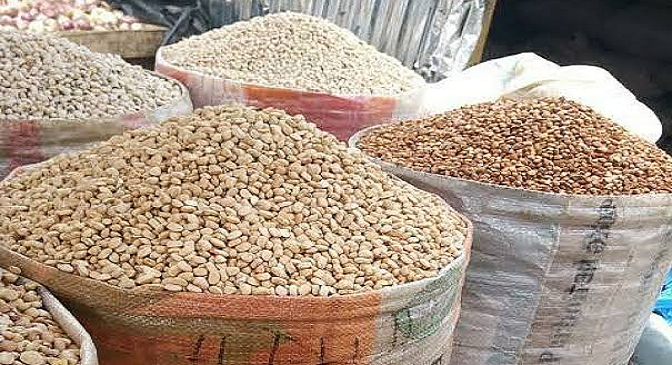
*Traders and consumers across Lagos markets agree the recent beans price hikes have affected household consumption, with some consumers reducing their purchases while turning to much cheaper alternatives, such as rice, Garri and spaghetti, especially across markets in Lagos State, the commercial hub of Nigeria
Isola Moses | ConsumerConnect
Attributed to seasonal factors rather than shortage or distribution challenges, the reported price hike of beans in Lagos markets is forcing several consumers to buy less, switch meals, and adjust household budgets.
ConsumerConnect gathered that traders and consumers Friday, September 4, 2026, in Lagos, expressed concern over the development in separate interviews with the News Agency of Nigeria.
A Derica (tin measure) of beans, one of the key staple food items in Nigeria, currently sells for between N1,200 and N1,300 in Lagos, compared to N500 and N800 between April and June this year, report said.
Implications on purchasing power, household consumption
The development has affected household consumption, with some consumers reducing their purchases, and turning to cheaper alternatives, such as rice, garri and spaghetti in the state.
The current price increase has also affected traders’ purchasing patterns, with some reducing their bulk purchases to smaller quantities.
The development has also affected consumers’ buying frequency, as some now purchase beans less frequently because of the higher prices, report stated.
Mr. Monday Chukwu, a beans seller on Olaogun Street, Costain, in Orile area of Lagos mainland, linked the beans price increase to seasonal factors as against shortage or distribution challenges in the focus production and distribution value chain.
Chukwu said only traders who stored beans during the first production period usually benefited when prices increased during the off-season, report noted.
He also said: “It would only take about three months for everything to return to normal.”
The consumer described the development as a usual occurrence that happens every year.
Consumers are beginning to understand the situation, in spite of their dissatisfaction, said he.
Chukwu further disclosed a 50kg bag of beans, which sold for N125,000 April 2026, had increased to N160,000 August of the year.
According to him, the increase has made it difficult for some consumers to continue buying beans in their usual quantities from the affected markets.
Certain Mrs. Okorie, a beans cake (Akara) trader at St. Paul Primary School, Costain axis, said traders now needed wisdom and strategy to remain in business.
She said a cup of beans previously sold for N200 then, sold for N250, with traders also reducing the quantities because of the increased retail cost of the agricultural produce.
Mrs. Okorie said: “The size of the bean cake makes consumers dissatisfied and aggrieved.”
Likewise, Mr. Amos Ogbonna, a wholesale trader at Oyingbo market, also attributed the increase to the off-season.
Ogbonna said prices of the product could continue rising.
He related that he used dry pepper as a preservative to protect his stored beans from spoilage.
Despite the price increase, the trader disclosed he had continued buying in his usual quantity because customers understood that the fluctuation was beyond his control.
Mrs. Mary Chigozie, also a consumer in Lagos, said beans price increase had made it difficult for her household to maintain its previous level of beans consumption.
Chigozie, who said her household enjoyed eating beans, said she had reduced her purchase because of the rising cost in recent time.
The consumer said sellers added as much as N500 to the previous price in August, making the staple increasingly unaffordable for her family.
“It could be a seasonal default,” she said.
Chigozie expressed dissatisfaction with the speed of the price increase, saying it had forced her to consider alternatives such as rice, garri and spaghetti.
Mrs. Christabel Esezua, a trader on Ibadan Street, however, said the increase had not stopped her from purchasing beans in large quantities.
She, however, said: “I still buy in large quantities.”
Esezua said her customers yet understood the nature of the business, and knew that prices of the produce fluctuated because beans has no permanent price, according to report.