


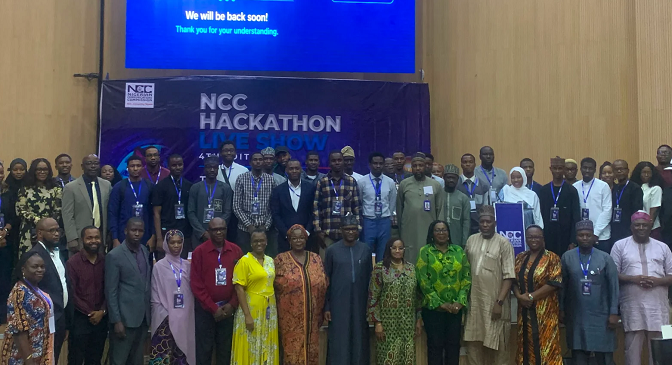
*The Nigerian Communications Commission reiterates its commitment to building an inclusive digital society where innovation, improved lives, expanded opportunities, and empowered consumers, including Persons With Disabilities, participate meaningfully in the digital economy
Gbenga Kayode | ConsumerConnect
In advancing digital economy, innovation and expanded opportunities for all, the Nigerian Communications Commission (NCC) has restated its commitment to promoting inclusive innovation and ensuring that technology serves all Nigerians, including Persons with Disabilities (PWDs).
ConsumerConnect reports Ms. Rimini Makama, Executive Commissioner, Stakeholder Management (ECSM) at NCC, stated this Wednesday, August 26, 2026, in Abuja, FCT, at the 4th Edition of the NCC Hackathon Live Show 2026, with the theme: “Technology without Barriers”.
IT Procurement reforms will strengthen innovation, Nigeria’s digital sovereignty — NITDA
Twenty contestants participated in the hackathon programme, with five emerging to compete in the grand finale scheduled for Thursday, August 27.
The digital innovation programme attracted innovators, entrepreneurs, researchers, developers, students and technology enthusiasts to develop practical solutions aimed at improving digital accessibility for PWDs.
In her address at the event, Ms. Makama, represented by Mr. Usman Malah, Director of Zonal Operations of NCC, said the hackathon was more than a technology competition.
The NCC Executive Commissioner, Stakeholder Management also said the event demonstrated the telecoms sector regulatory Commission’s commitment to building an inclusive digital society where innovation improved lives, expanded opportunities and empowered everyone to participate meaningfully in the burgeoning Nigeria Digital Economy.
She equally observed that the initiative showcased young innovators developing practical tech solutions to societal challenges, particularly those affecting PWDs, and other underserved communities across the West African country.
On NCC’s commitment to empowering PWDs
The NCC remains committed to fostering innovation, promoting indigenous technological development and ensuring that digital transformation is inclusive, accessible and beneficial to Nigerians, Makama averred.
The ECSM of NCC further noted the PWDs, and other underserved populations still face barriers in accessing communication services, education, healthcare, financial services, employment opportunities and government platforms.
According to her, such challenges required innovative solutions that are affordable, practical and responsive to Nigeria’s socioeconomic realities.
Makama said that participants would develop solutions in areas, including Artificial Intelligence (AI), assistive technologies, voice-enabled communication systems, sign language recognition, and accessible digital services.
The top official of the Commission affirmed the hackathon would strengthen collaboration among government, academia, industry, startups and the innovation community in developing technologies that addressed national priorities.
The NCC Executive Commissioner further said that investing in young innovators was an investment in Nigeria’s future, noting that successful technology ecosystems were built on creativity, resilience and determination.
Makama urged participants in the hackathon to focus on developing solutions that are simple to use, affordable, scalable, and capable of improving the quality of life of millions of Nigerians.
Focus on indigenous content, homegrown solutions in assistive techs
Earlier in her presentation, Mrs. Helen Obi, Director of Digital Economy of NCC, had said the hackathon demonstrated the Commission’s commitment to promoting indigenous content, developing homegrown solutions and building assistive technologies for universal access.
Mrs. Obi said the digital initiative was designed to address the needs of PWDs, and people in rural communities who had been excluded from actively participating in the Nigeria Digital Economy.
The NCC Director of Digital Economy said the focus areas included AI speech-to-text, real-time sign language translation, voice complaint systems, accessible customer-care services, USSD services, image-to-voice navigation and inclusive job-matching platforms.
The initiative, she stated, targeted FCT-based innovators, particularly Nigerians aged 18 to 25, software developers, researchers, students, entrepreneurs and PWDs.
She also disclosed that solutions would be assessed, based on innovation, accessibility, relevance, technical feasibility, scalability, affordability, sustainability, indigenous value addition, presentation and team capacity.
Obi said: “Expected outcomes include startup creation, local intellectual property development, promotion of indigenous innovation and stronger public-private sector collaboration.”
He restated the overall objective of the hackathon was to create inclusive digital opportunities for every Nigerian consumer, regardless of physical ability, location or background.