


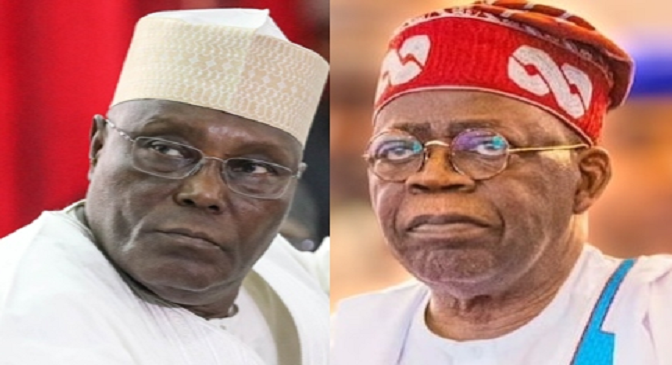
*Former Vice-President Atiku Abubakar says the Nigerian Government’s ‘recycled allegations’ will not explain what he has described as the current administration’s ‘opaque subsidy dealings’ in the economy
Alexander Davis | ConsumerConnect
Former Nigerian Vice-President Atiku Abubakar and presidential candidate of the African Democratic Congress (ADC), has dared the Federal Government to investigate him, if it has evidence of wrongdoing in connection with the alleged misappropriated $16 billion power project while in office.
Atiku contended that rather than recycle old allegations in the critical power sector whenever questions are raised about the management of the country’s resources, including the funds saved from the removal of fuel subsidy, the government is free to move against him.
IT Procurement reforms will strengthen innovation, Nigeria’s digital sovereignty — NITDA
The erstwhile Vice-President also purported the sudden revisiting of decades-long allegations concerning the power sector, privatisation and public assets is a predictable attempt to divert attention from the question confronting President Bola Ahmed Tinubu’s administration on where the money accruing to government from fuel subsidy removal is kept.
Phrank Shaibu, Senior Special Assistant (SSA) to Atiku on Public Communication, in a statement, said Nigerians should recognise the coordinated attempt to change the subject from the economic hardship confronting millions of families to allegations that have been repeatedly thrown around without prosecution.
Shaibu stated Atiku said: “The National Assembly investigated the power projects.
“I was never invited to answer any allegation of wrongdoing. Yes, I chaired the National Council on Privatisation as Vice-President.”
The former Vice-President stated: “But on the power project, I disagreed with its concept and did not preside over its implementation.
“The responsible Minister did. The same applies to the Aluminium Smelter matter.”
He also noted: “I have repeatedly asked to be investigated.
“I left office in 2007 and have spent much of the period since then opposing governments in power.
“If there is evidence that I stole public money, why has no government produced it before a court?”
Atiku further said: “It is still not too late. Investigate me.
“Invite me. Produce the evidence. Prosecute me if you have a case.
“But propaganda cannot substitute for evidence.”
The statement noted the attempt to resurrect old accusations intensified because his demand for accountability over the proceeds of subsidy removal strikes at the heart of the Tinubu administration’s economic narrative.
He said: “They removed subsidy from the poor and promised that the sacrifice would free resources for development.
“Nigerians accepted extraordinary pain on that promise.”
Atiku lamented: “Today, petrol is more expensive, transportation is more expensive, food is more expensive, and the purchasing power of the Nigerian worker has been devastated.
“Meanwhile, government revenues have increased, while fiscal incentives, waivers, tax credits and concessions continue to be available to powerful economic interests.”
Atiku stated: “So, our question remains brutally simple: where is the people’s money?
“You cannot take relief away from the poor, celebrate the resulting revenue and then, tell the same impoverished citizens that government intervention on their behalf is economically irresponsible while interventions benefiting powerful interests are called incentives.
“That hypocrisy is precisely what we are challenging.”
According to the former Vice-President, no amount of sponsored social-media mudslinging would make him retreat from demanding accountability or from proposing economic policies that restore purchasing power to Nigerian consumers.
“The people who removed subsidy from the poor cannot frighten us into silence by resurrecting allegations that governments with all the investigative machinery of the Nigerian state have had nearly two decades to establish.
“If you have evidence against Atiku, bring it. If you have a case, prosecute it,” stated he.
The ex-Vice President noted: “But if you have neither, stop manufacturing distractions and answer Nigerians: You removed the subsidy. You collected the savings. Where is the money?”
Atiku playing politics with Nigerians, says Presidency
Reacting to Atiku’s challenge, the Nigerian Presidency has renewed its criticism of the former Vice-President over his position on petrol subsidy.
The Federal Government accused him of repeatedly changing his stance on the policy, and playing politics with the temporary hardship Nigerians are experiencing following subsidy removal.
Mr. Bayo Onanuga, Special Adviser to the President on Information and Strategy, stated that “three different positions” had emerged from Atiku and his camp within seven days on what an Atiku administration would do about petrol subsidy, if voted into power.
The Presidency argued that the conflicting positions had raised questions about whether the proposal represented a coherent policy or merely electioneering.
Onanuga stated: “First, Atiku’s spokesperson, Paul Ibe, said Atiku would restore petrol subsidy if elected president and later phase it out.
“Ibe described it as a temporary intervention intended to give Nigerians and businesses room to recover.”
The government also said: “Then came a clarification from another senior aide, Phrank Shaibu, who said Ibe’s statement was an ‘unauthorised and misleading characterisation’ of Atiku’s position.
“But just hours later, Atiku himself intervened and effectively overruled that clarification.
“He insisted that his position ‘has not changed’ and that he would restore what he called a ‘targeted subsidy’ if elected President.”
The statement also noted: “He also said, ‘I will restore targeted subsidy and put purchasing power back in the hands of Nigerians.’ ”
Onanuga further described the development as more than a disagreement over semantics.
He maintained that it represented a contradiction that required clarification from the former Vice-President.
The Presidency stated: “If Atiku’s position has not changed, why did one of his principal aides say the subsidy would be temporary and phased out?
“Why did another senior aide have to publicly disown that explanation and introduce a completely different framework based on market conditions?
“And why did Atiku then step in to reaffirm the original position?”
The Federal Government said Nigerians deserved a clear and properly costed policy rather than what it described as policy “by trial and error”.
The statement also explained: “Either he has a coherent, costed and workable petroleum policy, or he is simply playing politics with a policy that has significantly restored fiscal health and stabilised the macroeconomic environment.”
It also questioned the economic assumptions underlying Atiku’s proposal.
The government also contended that restoration of a controversial petrol subsidy would not automatically translate into permanently lower pump prices for consumers.
According to the Presidency, petrol prices are influenced by international crude oil prices, exchange rates, refining costs, logistics, distribution margins and domestic taxes or levies.
It said increased competition could help compress margins and improve service delivery, but would not completely shield Nigerian consumers from movements in international oil markets.
It cautioned against reducing Nigeria’s cost-of-living crisis to petrol prices alone, arguing that food inflation had persisted even during periods when petrol subsidies were in place.
The statement noted: “There is also a troubling oversimplification in Atiku’s argument that ‘when fuel rises, transport rises.
“When transport rises, food rises. When food rises, families suffer.’ ”
Onanuga stated: “Of course, energy and transportation costs affect food prices.
“But petrol prices alone have never caused food inflation.
“Nigerians experienced rising food prices even during the years when petrol subsidy was in place.”
Some factors influencing food prices
The Nigerian Presidency listed agricultural productivity, insecurity, exchange rates, logistics, storage, flooding, input costs, money supply and supply constraints among factors that also influence food prices.
It said the Tinubu administration had been addressing those factors over the past three years rather than reducing the cost-of-living crisis to petrol prices.
The government also challenged Alhaji Atiku to explain the details of his proposed targeted subsidy, including its cost, beneficiaries, funding mechanism and conditions for its eventual termination.
It said: “We, therefore, urge Atiku to stop shifting positions and explain precisely what he means by ‘targeted subsidy’: how much will it cost, who will benefit, how will beneficiaries be identified, and what objective economic conditions will determine its eventual termination?”
The statement further warned that Nigerians could not afford another opaque, and potentially expensive subsidy regime presented under a different name.
“Nigerians cannot afford another opaque and potentially costly subsidy regime dressed up in new language.”
The government as well questioned Atiku’s understanding of the composition of a refined barrel of crude oil, particularly his focus on petrol as the principal product affected by subsidy policy.
“Is he aware that refined petrol comprises only about 45 percent of the by-products of a refined barrel?” It asked.
The Presidency said the remaining portion of a refined barrel produces diesel, aviation fuel, kerosene, petrochemical feedstock, asphalt and other products, many of which have been deregulated for years.
It noted that diesel accounts for roughly a quarter of a barrel, while kerosene and jet fuel had been deregulated since 2009, with subsidies subsequently removed in 2016.
It added that about 10 to 15 percent of a barrel produces base ingredients used in synthetic rubber, nylon, polyester and plastics, while asphalt accounts for about 2 to 4 per cent.
Hydrocarbon Gas Liquids (HGL), including propane and butane, account for about 4 percent, while lubricants and waxes constitute about 1 to 2 percent, alongside petroleum coke and sulphur.
It also questioned whether Atiku’s proposed subsidy would extend beyond petrol to other petroleum products used extensively by households and businesses across the country.