


*The Federal Government discloses the $1 billion Renewed Hope Social Protection Programme will help to create a more targeted and accountable system for supporting vulnerable households while assisting them transition from dependence to sustainable economic participation in the West African country
Isola Moses | ConsumerConnect
The Nigerian Government has launched its $1 billion Renewed Hope Social Protection Programme, aimed at moving vulnerable Nigerians beyond temporary relief towards sustainable economic empowerment and self-reliance.
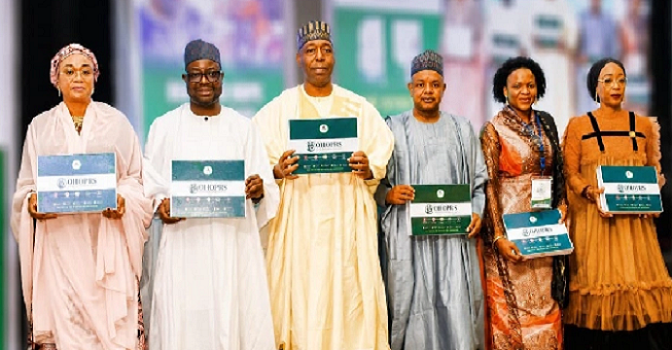
First Lady (Senator) Oluremi Tinubu unveiled the programme Wednesday, August 26, 2026, at an event in the Presidential Banquet Hall, State House, Abuja, FCT.
The government stated the initiative includes the Household Prosperity and Empowerment Social Protection Project (HOPE-SP).
It also affirmed that the initiative was designed to strengthen the identification and support of vulnerable households while providing immediate assistance and pathways to economic recovery.
ConsumerConnect reports the new-fangled Social Protection framework would build on ongoing cash-transfer reforms.
The Nigerian Government also disclosed the concept would help to create a more targeted and accountable system for supporting vulnerable households, helping them transition from dependence to sustainable economic participation.
Speaking at the launch, First Lady Tinubu described the HOPE-SP project as an important step towards improving the way government identifies and responds to vulnerable households.
She said: “The Household Prosperity and Economic Social Protection Project is an important step towards strengthening how to identify and respond to vulnerable households facing various challenges by listening to their specific needs before taking action.”
The Nigerian First Lady also explained the programme was designed to provide immediate stabilisation assistance while placing beneficiaries on a pathway to recovery, empowerment and self-reliance.
She equally highlighted the One Humanitarian, One Poverty Response System, which she said would provide a coordinated national response to humanitarian crises, social protection and poverty reduction.
According to her, the system would help prevent duplication of interventions and maintain unified national registries for tracking poor and vulnerable households as they progress from vulnerability to prosperity.
HOPE-SP initiative targets about 7.6m vulnerable households
The government revealed the HOPE-SP initiative targets about 7.6 million vulnerable households across the country, with eligible households expected to receive a one-off digital shock-response cash transfer of ₦40,000.
The Federal Government said beneficiaries would be selected from the National Social Register, and validated with their National Identification Numbers (NINs) to strengthen transparency and ensure that assistance reaches genuine beneficiaries.
The government as well disclosed its working relationship with the National Identity Management Commission to ease the National Identification Number (NIN) registration and improve the verification process.
Speaking at the ceremony also, Bernard Doro, Honourable Minister for Humanitarian Affairs and Poverty Reduction, said the programme would adopt a different approach to poverty reduction by deliberately tracking households and measuring their progress towards economic self-reliance.
The Minister stated: “We have a system where we want to deliberately track poverty.”
According to him, the programme will strengthen the coordination of humanitarian interventions, social protection and poverty reduction, while placing households at the centre of government support.
The Federal Government has disbursed over ₦600 billion in cash transfers to vulnerable Nigerians over the past three years, stated Doro.
Speaking on ChannelsTV Wednesday after the launch of the programme, the Minister noted the intervention had reached slightly over 10 million households.
He explained: “We’ve done over 600 billion in cash transfers to be able to support vulnerable Nigerians within three years.
“We have reached slightly over 10 million households.”
Borno Governor speaks on policy initiative
In his remarks at event, Governor (Prof.) Babagana Zulum of Borno State said the programme could contribute to addressing some of the underlying causes of insecurity in the country.
Zulum said poverty, illiteracy and social inequality were among the factors contributing to insurgency and crises, stressing that military action alone could not permanently resolve such challenges.
The Borno Governor stated: “The kinetic measures alone will never end the insurgency. Addressing the social, economic, and political dimension of the crisis is synchronous to addressing insecurity challenges in Nigeria.”