


*Kashifu Inuwa Abdullahi, CCIE, Director-General, National Information Technology Development Agency, advocates much stronger collaboration among the Nigerian Government regulators to accelerate the establishment of the country’s National Regulatory Sandbox
Isola Moses | ConsumerConnect
The National Information Technology Development Agency (NITDA) has advocated stronger collaboration among government regulators to accelerate the establishment of Nigeria’s National Regulatory Sandbox.
ConsumerConnect reports NITDA has described the inter-agency cooperation as “the cornerstone” for building an innovation-friendly regulatory ecosystem.
Economy: IT Regulator, UniAbuja to drive tech innovation, research for inclusive growth in Nigeria
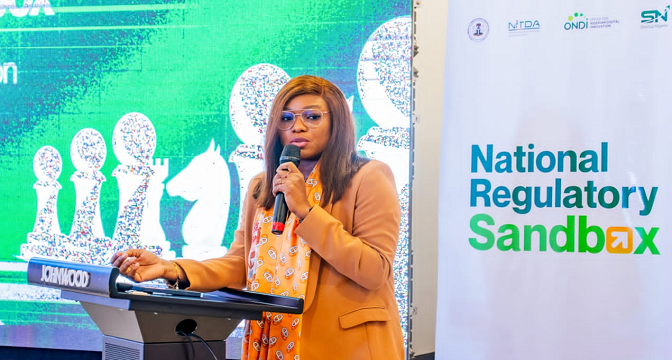
Malam Kashifu Inuwa Abdullahi, CCIE, Director-General of the agency, stated this at the National Regulatory Sandbox Governance and Implementation Planning Workshop, in Abuja, FCT.
Represented at the forum by Ms. Victoria Fabunmi, National Coordinator of the Office for Nigerian Digital Innovation (ONDI), Inuwa said the success of the initiative would depend on regulators working collectively, to develop a framework that promotes tech innovation while preserving regulatory integrity and public trust.
The Director-General of NITDA noted the workshop marked a significant transition from the design phase of the project to its implementation stage, where regulators attempted to jointly refine, and validate the proposed governance structure before its rollout.
According to him, ONDI has spent several months laying the foundation for the initiative through extensive stakeholder consultations, ecosystem mapping, regulatory assessments and the preparation of a draft governance and implementation framework.
He also stated: “The work completed so far provides a solid foundation, but the National Regulatory Sandbox can only achieve its objectives through collective ownership by all relevant regulatory institutions.”
The Chief Executive of the agency explained that the Technical Working Group was deliberately established as a collaborative platform to harness the expertise, experience and statutory mandates of participating agencies in shaping a regulatory model tailored to Nigeria’s innovation landscape.
The workshop, he noted, was designed to critically review the proposed governance framework, test its assumptions and incorporate practical recommendations from stakeholders to ensure that the final model is inclusive, effective and adaptable to the country’s rapidly evolving digital economy.
Inuwa further observed that as government institutions have different regulatory responsibilities, those differences should be viewed as strengths that could support the development of a coordinated and flexible implementation framework capable of responding to emerging technologies.
Inuwa also emphasised that the engagement would establish clear implementation pathways, strengthen institutional partnerships and identify priority actions required to operationalise the National Regulatory Sandbox.
Expressing optimism about the outcome of the deliberations, the NITDA Chief said the workshop would help build a shared national vision for the initiative while creating an enabling environment where innovators can safely develop, test and scale new technologies under appropriate regulatory supervision.
He as well commended participants for their commitment to strengthening Nigeria’s digital innovation ecosystem and encouraged them to make meaningful contributions that would shape a practical, innovation-driven regulatory framework capable of supporting sustainable economic growth and enhancing the country’s global competitiveness.
Speaking on the National Regulatory Sandbox journey and current worksream also, Ms. Ojonoka Yusufu, Implementing Partner Druve, said the initiative would provide a coordinated framework through which innovators and regulators could work together to test emerging technologies while ensuring compliance with existing laws and regulations.
Ms. Yusufu explained that the workshop was convened to build a shared understanding among participating regulators and stakeholders, develop consensus on the Sandbox’s operating model, identify implementation gaps before rollout and agree on the next steps for its successful implementation.
She stated: “We do not have anything set in stone yet.
“The idea is to work together to build a common understanding and ensure that all participating regulators and stakeholders are aligned on the objectives and implementation of the National Regulatory Sandbox.”
On contribution of ICTs to Nigeria’s GDP
Highlighting the importance of the initiative, Yusufu also affirmed that Nigeria’s Information and Communications Technology (ICT) sector remains one of the country’s highest contributors to Gross Domestic Product (GDP).
She noted that the country’s startup ecosystem has continued to attract significant global investments.
The Implementing Partner Druve further observed that Nigerian startups are creating jobs, attracting foreign investment and positioning the country as a leading innovation destination in Africa.
According to her, the rapid expansion of startups beyond traditional sectors such as financial technology into healthcare, mobility, agriculture and other industries has made closer regulatory coordination increasingly necessary.
The National Regulatory Sandbox is backed by the Nigeria Startup Act, providing the legal foundation required to drive responsible innovation and improve the country’s regulatory environment, said Yusufu.
She, therefore, described the Sandbox as a collaborative, multi-agency innovation governance mechanism that complements, rather than replaces, existing regulatory institutions.