


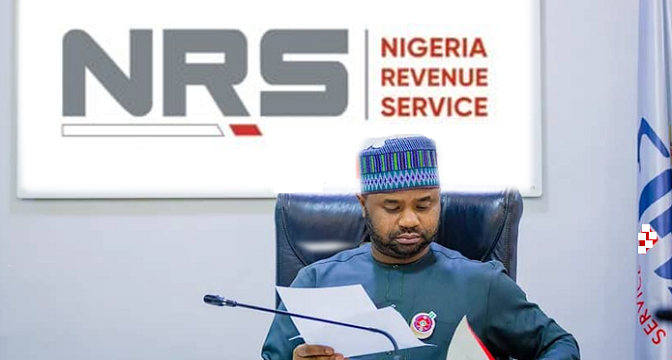
*The Nigeria Revenue Service directs large corporate taxpayers to adopt e-invoicing by July 31, 2026, or face appropriate sanctions as compliance monitoring begins across the country
*Alexander Davis | ConsumerConnect
The Nigeria Revenue Service (NRS) has directed large taxpayers to adopt e-invoicing by July 31, 2026, or face appropriate sanctions as compliance monitoring begins.
Dr. Zacch Adedeji, Executive Chairman of NRS, stated this at the weekend, encouraged large taxpayers in the Nigerian economy to fully migrate to the national e-invoicing and Electronic Fiscal System (EFS) by the end of this month, or risk regulatory sanctions.
FCCPC warns Dangote Refinery against illegality of pricing petrol in Dollars in Nigeria
ConsumerConnect reports the country’s foremost tax administrator noted this in a public notice Dr. Adedeji personally and issued.
The Revenue Service has described large taxpayers as companies with an annual gross turnover of N5 billion and above, and constitute the first category of businesses required to adopt the system in the country.
The agency said all onboarding, testing, system integration, and invoice transmission must be completed by July 31.
By implication, businesses must use the Merchant Buyer Solution (MBS), meaning all invoices exchanged must be electronic, and carry a valid Invoice Reference Number (IRN).
The Executive Vice-Chairman disclosed the NRS already had commenced compliance monitoring to determine the level of adherence among affected companies.
He also warned that businesses which fail to complete the migration before the deadline would face enforcement actions in line with extant tax laws.
It is noted that the directive forms part of the implementation framework for the National E-Invoicing and Electronic Fiscal System, also known as the Merchant Buyer Solution (MBS).
Mr. Dare Adekanmbi, Special Adviser on Media to the NRS Chairman, also stated that the latest notice reinforced an earlier public notice issued February 17 this year.
The notice had outlined the phased implementation timetable and made adoption of the electronic invoicing platform mandatory for large taxpayers.
It was gathered that the Revenue Service had moved beyond the sensitisation phase, and is now actively monitoring compliance across eligible companies operating in the economy.
Adekambi stated that any organisation found to be in default of the directive could be subjected to appropriate regulatory and enforcement measures as provided under relevant tax legislation.
The statement also urged all affected taxpayers to immediately conclude outstanding onboarding, system integration, testing and validation processes, while commencing the transmission of invoices to the NRS e-invoicing platform before the expiration of the compliance window.
The NRS further stated in the notice: “The NRS has already commenced compliance monitoring activities in order to assess the level of adherence to the e-invoicing mandate among large taxpayers.
“Consequently, any defaulting member may be subjected to appropriate regulatory and enforcement actions in accordance with the provisions of the relevant tax laws and regulations.
“The NRS appreciates the cooperation of taxpayers and remains committed to providing the necessary support to ensure the successful implementation of the national e-invoicing regime.”
The tax administration agency assured of its continued commitment to supporting taxpayers to ensure a seamless transition to the new digital tax administration framework.
Of the whole lot in the economy, the NRS affirmed that over 1,000 companies had successfully complied with the directive as of the First Quarter (Q1) of the year.
This development, it said, signalled increasing acceptance of the initiative among major corporate taxpayers in Nigeria.
According to NRS, to attain full compliance, affected companies are expected to complete registration and onboarding on the Merchant Buyer Solution, successfully integrate their internal systems through approved Access Point Providers (APPs) or Systems Integrators (SIs), and conclude all validation and testing requirements.
They are also required to actively transmit invoices to the NRS platform in accordance with approved standards and ensure that invoices received from suppliers carry valid Invoice Reference Numbers (RINs).
Benefits of electronic invoicing initiative
The Nigeria Revenue Service noted the electronic invoicing initiative has remained a key component of its broader digital tax administration reforms in the West African country.
The reforms are aimed at improving transparency, strengthening tax compliance, reducing revenue leakages, and enabling real-time monitoring of commercial transactions across the economy.
In regard to the current stage of enforcement drive, the Management of NRS noted the Service had already begun active compliance monitoring across the country.
Defaulters risk significant financial, regulatory consequences
Meanwhile, the Service has reportedly said defaulters are at risk of significant financial and regulatory consequences.
Likewise, non-compliant transactions could attract hefty penalties per invoice, and missing invoices may fail to qualify for VAT input credits or tax-deductible expense treatment, according to report.
Company executives, therefore, are urged to avoid disruptions to their operations and potential fines.