


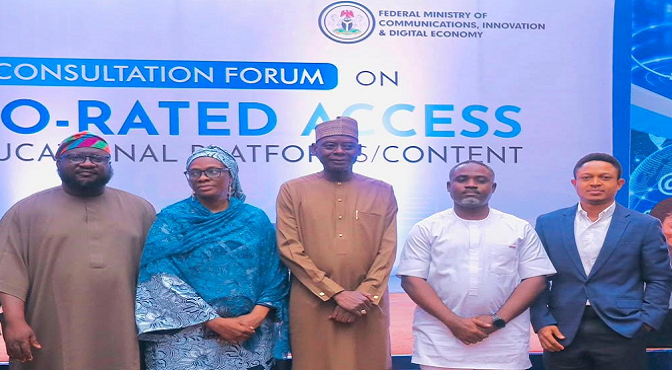
*Dr. Aminu Maida, Executive Vice-Chairman and CEO, Nigerian Communications Commission, states the education initiative is expected to contribute significantly to national efforts at expanding educational opportunities, enhancing digital literacy and harnessing tech to drive socio-economic development across the country
Alexander Davis | ConsumerConnect
The Nigerian Communications Commission (NCC) has said it received a groundswell of support of stakeholders drawn from government, industry, international development organisations, and the private sector for an initiative to provide zero-rated access to educational platforms and digital learning content for students, learners across the West African country.
The NCC disclosed the stakeholders announced their endorsement during the first public consultation forum on the proposed framework, held Tuesday, July 14, 2026, in Abuja.
Nigeria: Federal, state development projects justify oil subsidy removal –Presidency
ConsumerConnect reports the theme of the public consultation forum was “Zero-Rated Access to Educational Platforms and Content in Nigeria”.
Participants in the forum described the educational initiative as a significant step towards promoting not only connectivity, but also equitable access to education and digital inclusion across the country.
The stakeholders present included representatives from the Federal Ministry of Communications, Innovation and Digital Economy, the Federal Ministry of Education, the United Nations Educational, Scientific and Cultural Organisation (UNESCO), the Association of Licensed Telecommunications Operators of Nigeria (ALTON), the Nigerian Governors’ Forum (NGF), and uLesson Group, among others.
During the deliberations, NCC disclosed the participants emphasised the significance of stronger collaboration among stakeholders, as well as sustained investments in network expansion and infrastructure upgrades by telecoms operators and Internet Service Providers (ISPs).
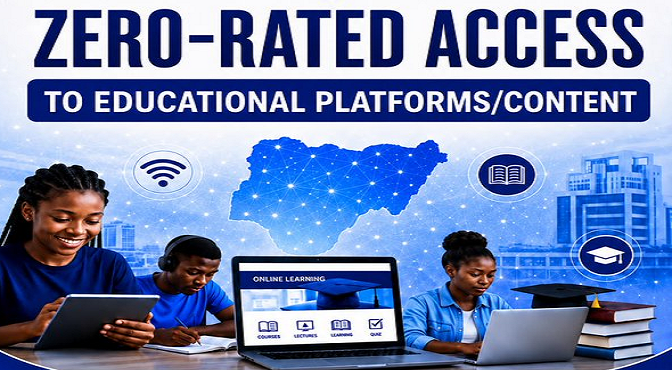
The stakeholders also noted that reliable and affordable Internet connectivity is essential for the successful implementation and sustainability of zero-rated educational services in Nigeria.
Earlier, in his opening remarks at the forum, Dr. Aminu Maida, Executive Vice-Chairman and Chief Executive Officer (EVC/CEO) of NCC, disclosed that the Industry Committee established to develop the initiative had carefully examined its technical, policy, regulatory and commercial dimensions.
Maida noted the Committee subsequently, developed a consultation paper to facilitate stakeholder engagement, and gather public inputs on the proposed framework.
The Executive Vice-Chairman, represented by Ayuba Shuaibu, Director of Policy, Competition and Economic Analysis Department at NCC, emphasised that broad-based stakeholder participation is critical to developing a framework that reflects industry realities while advancing national educational objectives.
Maida harps on stakeholders’ collaboration for success
The EVC/CEO of the telecoms sector regulatory Commission further stated that the framework must be informed by the perspectives of network operators, educational institutions, content providers, government agencies, development partners, civil society organisations, students, teachers, and the wider public.
According to him, students, teachers, and the wider public as stakeholders stand to benefit from improved access to digital learning opportunities in Nigeria.
Maida stressed the significance of stakeholders’ collaboration in ensuring that the framework adequately balances educational needs with regulatory effectiveness, transparency, fairness and long-term sustainability.
He equally noted that the consultation forum forms part of the Commission’s commitment to promoting digital inclusion while expanding access to education through technology.
The Chief Executive of NCC further explained that the engagement attracted stakeholders from the communications, education, technology and development sectors of the economy to deliberate on practical measures for facilitating access to accredited educational platforms and content at no data cost or through specially supported access arrangements.
Core objectives of zero-rated educational services
The NCC’s zero-rated access to educational services initiative, stated Dr. Maida, is designed to reduce digital and connectivity barriers to learning while expanding access to educational resources, particularly for students and other learners across the country.
Mrs. Nnenna Ukoha, Director of Public Affairs Department of the Commission, also stated Maida said: “The initiative also forms part of the Commission’s broader efforts to leverage technology in advancing national educational objectives and promoting inclusive digital participation.”
The forum afforded the stakeholders with an opportunity to review the objectives of the Zero-Rated Access Initiative, examine the proposed implementation framework, and contribute technical, legal, regulatory, competition, commercial and operational perspectives necessary for its successful implementation.
Besides, discussions at the forum focused on key issues, including the implementation approaches, eligibility criteria for educational platforms and content, governance mechanisms, consumer protection safeguards, operational requirements, and principles for identifying accredited educational resources that might qualify for zero-rated access.
Stakeholders as well offered recommendations aimed at strengthening the framework and ensuring its long-term viability.
The Director of Public Affairs stated the Commission noted that submissions and recommendations received from stakeholders at the forum would play a vital role in refining the proposed framework and developing an effective roadmap for implementation.
Maida restated the initiative is expected to contribute significantly to national efforts at expanding educational opportunities, enhancing digital literacy and harnessing technology to drive socio-economic development across Nigeria.