


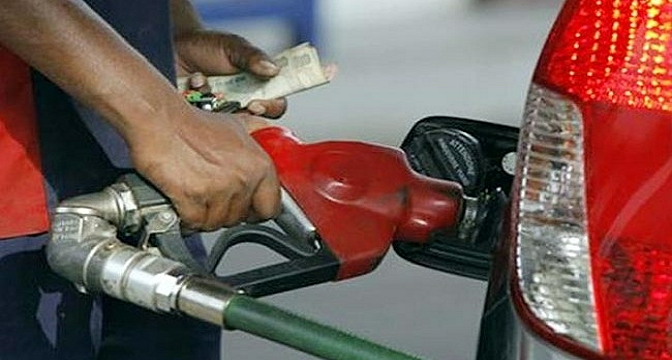
*Nigeria’s Federal Competition and Consumer Protection Commission threatens to sanction oil market profiteers, stating a recent review of the gantry prices of local refiners, marketers, depot operators and retail outlet operators indicated token reductions in prices not commensurate with marked drop in crude prices globally
Isola Moses | ConsumerConnect
The Federal Competition and Consumer Protection Commission (FCCPC) has expressed concern over undue exploitation of consumers, following recent findings from surveillance of the downstream petroleum market.
The Commission said a review of the gantry prices of local refiners, marketers, depot operators and retail outlet operators revealed token reductions in prices that are not commensurate with the steep fall in crude prices in the global market.
Insecurity: Lagos, Ogun laud ‘Operation Kosaye’ for crushing kidnappers, armed robbers, others
Mr. Tunji Bello, Executive Vice-Chairman and Chief Executive Officer (EVC/CEO) of FCCPC, reacting to the market development, stated: “To be clear, the Commission does not regulate or approve petroleum prices in a deregulated downstream market.
“Our responsibility under the Federal Competition and Consumer Protection Act, 2018, is to promote competitive markets, prevent anti-competitive conduct, and protect consumers from unfair, deceptive and exploitative business practices.”
Bello declared: “We are concerned that while dealers often respond swiftly by hiking pump prices whenever crude prices rise, it is curious that it is taking forever for consumers to benefit significantly when crude prices fall.
“Competitive markets must work fairly in both directions.”
ConsumerConnect reports that following the recent eerie ceasefire accord between the United States (US) and Iran, and subsequent reopening of the critical Strait of Hormuz, crude prices have fallen to $73, a sharp drop from the peak of $120 per barrel April this year.
The global market crude prices have since returned to the February levels, according to report.
Recent price movements in global cum local oil markets
It is recalled that the earlier spike in crude prices witnessed Nigerian oil refiners and marketers in raising pump prices swiftly across the West African country, with petrol price climbing to between N1,350 and N1,500, and diesel selling N2,000 as hostilities intensified in the gulf between April and May 2026.
The Commission as well noted that Premium Motor Spirit (PMS), also called petrol averaged between N800 and N900 as of late February just prior to the US/Israel- Iran war.
The FCCPC said PMS is still sold at average of N1,200 while some local refiners fixed between N1,025 and N1,075 as their gantry prices across the country.
Though recognising that domestic prices are influenced by a range of commercial and market factors (including refining costs, Foreign Exchange (Forex) movements, logistics, financing and distribution expenses), the Commission yet affirmed that it expected competitive market dynamics to have eased the swift transmission of resulting cost efficiencies to consumers.
EVC/CEO harps on market liberalisation, consumer protection
Bello further stated: “Market liberalisation does not diminish businesses’ obligations to compete fairly or consumers’ right to fair treatment.
“Where credible evidence indicates conduct that undermines competition, exploits consumers or otherwise contravenes the Federal Competition and Consumer Protection Act, the Commission will investigate and take appropriate enforcement action.”
He, therefore, encouraged consumers to continue reporting suspected anti-competitive conduct, misleading pricing practices and other forms of unfair market behaviour through the Commission’s established complaint channels.