


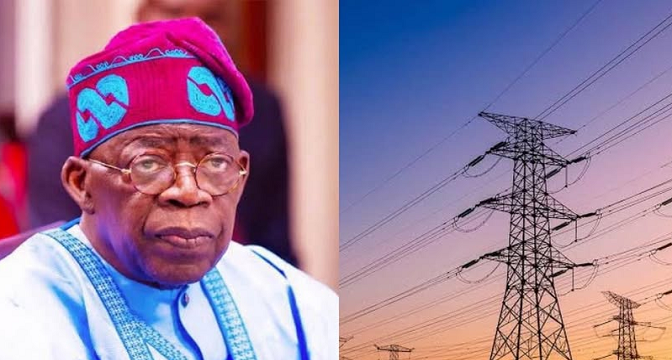
*Nigeria’s electricity sector has reportedly received about $3.653 billion in World Bank-backed funding in the last 24 years, millions of consumers, households and businesses across the West African country yet continue to contend with unstable power supply, frequent grid collapses, and heavy reliance on power generators
Isola Moses | ConsumerConnect
Nigeria’s electricity sector has reportedly received about $3.653bn in World Bank-backed funding in the last 24 years, millions of consumers, households and businesses across the West African country yet continue to contend with unstable power supply, frequent grid collapses, and heavy reliance on power generators.
Recent analysis of World Bank-supported power projects between 2001 and 2024 indicated that successive interventions targeted transmission upgrades, sector reforms, rural electrification, renewable energy expansion, and recovery programmes aimed at stabilising the country’s troubled electricity industry.
OAU at 65: The quiet revolution of Prof. Adebayo Bamire to rebuild Great Ife
The World Bank data, as reported by Statisense, also showed that the projects include the $100 million Transmission Development Project introduced in 2001, the $172 million National Energy Development Project in 2005, and the $400 million Nigeria Electricity and Gas Improvement Project launched in 2009.
Others are the $145 million Nigeria Power Sector Guarantees Project in 2014, the $486m Nigeria Electricity Transmission Project in 2018, the $350 million Nigeria Electrification Project also in 2018, the $750m Power Sector Recovery Programme approved in 2020, the $750 million Distributed Access through Renewable Energy Scale-up programme introduced in 2023, and the $500 million Sustainable Power and Irrigation for Nigeria project launched in 2024.
The cumulative funding from the projects totals about $3.653bn, excluding regional interconnector and hydro rehabilitation projects for which no exact figures were stated. Despite the multi-billion-Dollar interventions in the past 24 years, Nigeria’s electricity supply has remained inadequate for the increasing population and industrial demands.
Besides, the national grid has continued to suffer repeated collapses, while power generation has largely hovered below expectations for Africa’s most populous country.
Several millions of electricity consumers, households and businesses still depend heavily on Premium Motor Spirit (PMS), also known as petrol, and diesel generators due to unreliable supply from distribution companies.
Industry experts have repeatedly blamed the crisis on weak transmission infrastructure, liquidity shortfalls in the power market, gas supply constraints, vandalism, inadequate investment, and policy inconsistencies.
The interventions over the years also reflect a shift in the World Bank’s strategy from conventional transmission and gas-focused projects towards renewable energy and decentralised electricity access.
Recent programmes, such as the Distributed Access through Renewable Energy Scale-up initiative and the Sustainable Power and Irrigation for Nigeria project are designed to expand solar-powered electricity access, particularly in underserved and rural communities.
The World Bank had stated that the programmes were aimed at improving electricity access, strengthening the transmission network, and supporting reforms capable of attracting private investment into the sector.
However, concerns persist over the pace of implementation and the overall impact of the interventions on electricity consumers.
Businesses across Nigeria continue to cite high energy costs as a major operational challenge, with manufacturers spending huge sums on self-generation amid poor grid supply.
The persistent electricity crisis has also continued to affect productivity, small businesses, healthcare delivery, and living conditions nationwide.
Stakeholders said the continued dependence on donor-backed interventions underscores the depth of structural problems in the power sector, more than a decade after the privatisation of electricity generation and distribution companies.
They noted that while the interventions have helped expand infrastructure and improve electricity access in some areas, a stable and reliable nationwide power supply remains largely elusive.
Earlier, the Federal Government had cancelled $717.7 million in undisbursed World Bank financing for Nigeria’s troubled electricity sector, effectively terminating the remaining portion of a $1.52 billion power sector recovery programme, according to reports.
Documents obtained from the World Bank Web site equally indicated that the cancellation followed a formal request by the Federal Government and a joint decision by both parties to discontinue financing under the Power Sector Recovery Performance-Based Operation due to evolving sector realities and the inability to achieve key reform milestones.
According to the World Bank restructuring paper, the cancelled amount represents the entire undisbursed balance remaining under the programme.
The World Bank stated: “The restructuring will result in the cancellation of the entire undisbursed balance in the amount of $717.7m equivalent, and no further disbursements will be made under the programme following approval of this restructuring.”
It also disclosed that the programme’s closing date had been brought forward from June 30, 2027, to May 31, 2026, effectively ending the operation more than a year ahead of schedule.
The cancelled facility formed part of a broader World Bank intervention designed to revive Nigeria’s struggling power sector.
Energy expert speaks on addressing power sector challenges
A Professor of Energy, Dayo Ayoade, of the University of Lagos (UNILAG), blamed corruption and poor governance for the country’s electricity woes.
The Punch report noted Prof. Ayoade said the Nigerian economy would continue to lose money and not develop, “provided we don’t take control of the power sector.”
The energy expert also opined that there are too many loopholes and leakages.
He cautioned that the country’s economy would continue to suffer because self-generation is too costly for the common man and small businesses.
Ayoade further stated: “Until the power sector is put right, the economy will continue to suffer, Nigerians will continue to suffer, and there is no way out of this.
“Self-generation doesn’t work because it’s inefficient.”
The expert averred: “The kind of resources you need to generate power, like gas, are out of the hands of private individuals or companies. “So, it is very important that the government takes the lead.”
Nigeria needs holistic power sector reform: Ayoade
Urging the Nigerian Government to ensure a judicious use of all resources, Prof. Ayoade noted the way forward is for the government to undertake holistic reforms of the sector.
He, therefore, advocated the removal of electricity subsidies in the power sector of the economy.
“That reform requires us to tell one another the truth. Nigerians will have to pay more money for power.
“Tariffs must reflect the cost of delivering electricity. Also, creating new institutions like GAMCO and others all the time means there is a proliferation of institutions in the sector.
“We need to streamline the sector; we need to control corruption,” said he.
Ayoade submitted that governance is key to the power sector.
The energy expert said: “One of the reasons the sector is not working is poor governance.
“Billions of dollars were spent on power in the past with no appreciable electricity.
“We can’t continue down that way. There are too many loopholes and leakages. We have to address this.”